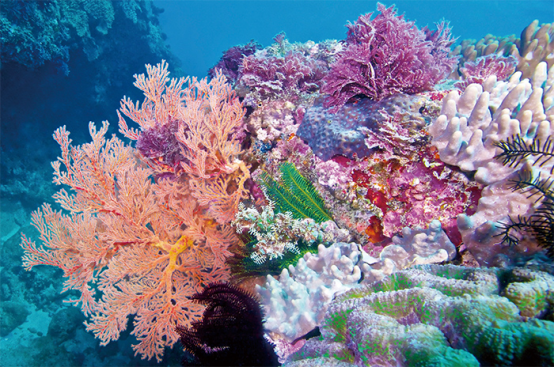
The Myth and Reality of Marine Flowers
The concept of “ocean flowers” is a frequent subject of curiosity for marine biology enthusiasts. While the visual aesthetic of coral reefs—often mistaken for gardens—suggests a floral landscape, true flowering plants, or angiosperms, are remarkably rare in the marine environment. Most organisms that appear to be flowers are actually colonial animals or non-flowering algae.
Understanding Angiosperms in the Ocean
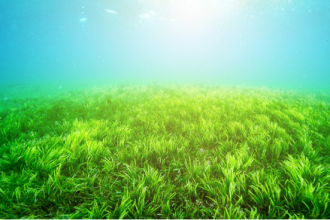
There are select species of seagrasses that are technically angiosperms. Unlike terrestrial flowers that rely on insects or birds for pollination, these marine plants have adapted to submerged existence. Their “flowers” are often inconspicuous and designed for hydrophily, where pollen is transported via water currents.
- Seagrasses: The primary group of marine flowering plants.
- Pollination Adaptation: Evolution of thread-like pollen to increase the surface area for water-borne capture.
- Reproductive Cycle: These plants produce seeds and fruits, though they are rarely visible to the casual observer.

Structural Differences: Ocean vs. Land Plants
Plants living in the ocean face vastly different stressors compared to their terrestrial counterparts. While land plants must combat dehydration and gravity, marine plants operate in a buoyant, nutrient-rich, and saline environment. These environmental pressures have dictated the evolution of their physical structures.
Comparison of Physiological Features
| Feature | Terrestrial Plants | Marine Plants |
|---|---|---|
| Support | Cellulose/Lignin (Rigidity) | Buoyancy (Flexibility) |
| Nutrient Uptake | Root-centric (Soil) | Whole-body absorption (Water) |
| Water Regulation | Stomata for gas/water exchange | Direct diffusion through epidermis |
The Role of Buoyancy
Because the density of seawater provides structural support, marine plants do not require the dense, woody tissues found in land-based trees. Instead, they utilize aerenchyma—spongy, air-filled tissues—to maintain vertical orientation within the water column, allowing them to capture sunlight efficiently without the need for rigid trunks.

Survival Mechanisms in Saline Environments
Salinity management is the greatest hurdle for any plant species transitioning from freshwater or land to the ocean. Marine plants have developed sophisticated biochemical pathways to prevent osmotic stress, which would otherwise dehydrate their cellular structures.
Osmoregulation and Salt Tolerance
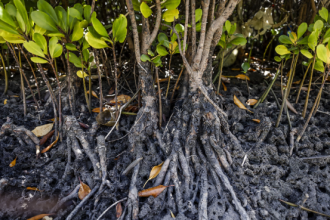
Marine plants, such as mangroves and seagrasses, employ active transport mechanisms to manage salt ions. By sequestering salts in specialized vacuoles or excreting them through salt glands, these plants maintain the internal water potential necessary for photosynthesis.
Photosynthetic Adaptations
Light penetration decreases rapidly with depth in the ocean. Consequently, marine plants and algae have evolved accessory pigments. While land plants rely primarily on chlorophyll-a, marine vegetation often utilizes chlorophyll-b, c, and various carotenoids to capture the specific wavelengths of light that penetrate the water column.

Ecological Importance of Marine Vegetation
Marine plants serve as the foundation of the oceanic food web. Beyond providing food, they are critical to the physical architecture of the seafloor, acting as nurseries for juvenile fish and stabilizers for coastal sediments.
Carbon Sequestration
Seagrass meadows are among the most efficient carbon sinks on the planet. Through a process known as “blue carbon” storage, these plants trap organic matter in the sediment, sequestering carbon at rates significantly higher than terrestrial forests of comparable size.
Frequently Asked Questions (FAQ)
- Q1: Are corals considered flowers?
- No, corals are animals belonging to the phylum Cnidaria. While their polyps may look like petals, they are predatory organisms that capture plankton with stinging cells.
- Q2: Why don’t ocean plants have colorful petals?
- Flowers on land evolved colorful petals to attract pollinators like bees and birds. In the ocean, pollination occurs via water currents, so there is no evolutionary advantage to investing energy in bright, showy petals.
- Q3: Can seaweed be classified as a plant?
- Seaweed, or macroalgae, is technically protist, not a plant. They lack the complex vascular systems (xylem and phloem) found in true land plants and marine angiosperms.
- Q4: Do marine plants require soil?
- Most marine plants, like seagrasses, do require a substrate (sand or mud) to anchor their roots. However, they obtain most of their nutrients directly from the water column rather than the soil.