Educational note: This site publishes independent educational content for general readers. Articles about ecology, wildlife, conservation, pollution, animal behavior, or environmental risk are informational only and should not be treated as scientific, legal, regulatory, veterinary, medical, emergency, or professional advice. Consult qualified experts, peer-reviewed sources, and official local guidance before making decisions.
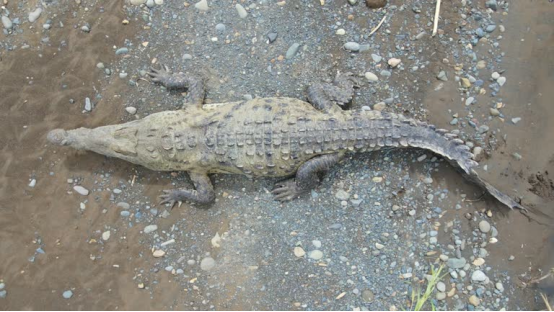
When most people think of crocodiles, they imagine cold-blooded killers with bloody mouths lurking silently in the water. But if I tell you that this one of the oldest reptiles on earth is actually one of the most dedicated parents in the animal kingdom, would you be surprised?
In nature, many reptiles have a very “Buddhist” parenting style: after laying eggs, they pat their butts and walk away, leaving the little lives to fend for themselves. But crocodiles break this “tradition” and show their “hardcore” parenting instincts. Today, we will unveil the mystery of crocodile parenting life, from hatching, protecting cubs to fighting wits and courage with predators, and see the gentle side of this “cold-blooded mother”.
The long wait for hatching: three months of care
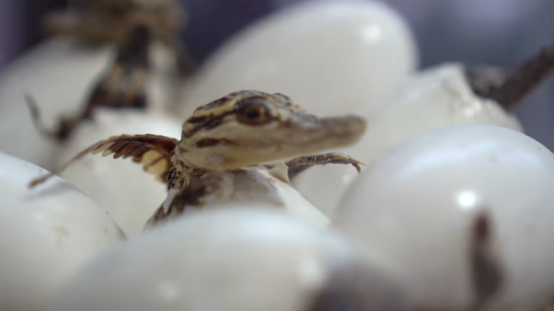
For a mother crocodile, laying eggs is only the first step in the “child-rearing journey”. After the mating season every year, the female crocodile will choose a hidden wetland to build a nest and lay nearly a hundred eggs in the nest. Scientists point out that these nests are usually made of mud, plants and wet grass. Their structure can not only maintain a constant humidity, but also use the heat generated by rotting plants to provide a “natural incubator” for the embryos.
From this moment on, the mother crocodile’s “long wait” officially begins. For about 90 days, she hardly leaves the nest, and she always sticks to her post even in the scorching sun or heavy rain. This kind of persistence is extremely rare among reptiles.
Imagine if human parents had to stay by their baby’s crib for three consecutive months without sleep, who could do it? Crocodile mother, with her patience, proved that cold-bloodedness does not mean indifference.
The surprise of breaking the shell: Mother’s love begins with the first call
When the baby crocodiles are about to break out of their shells, they will make a faint “squeak” sound, just like a fetus kicking in the womb. This is their signal to the mother: “Mom, I’m ready!” The mother crocodile will patiently listen to these tiny sounds and help those cubs who have difficulty breaking out of the shell.
At this moment, the crocodile, which is famous for its “bite force”, unexpectedly showed a touching tenderness. It gently crushed the eggshell to prevent the cub from suffocating due to lack of oxygen. For a top predator that can bite off a cow’s leg with one bite, this kind of precise control is simply an art.
Relocation by water: a high-risk task of “holding a baby” with your mouth
The nest is usually located away from major bodies of water to avoid flooding or predators, but this also means that the cubs must be “moved” after hatching. Who is responsible? The mother, of course.
The way of carrying is very vivid: the mother crocodile will gently hold the baby crocodiles in her mouth, three or five at a time, and make dozens of trips back and forth, transferring nearly a hundred children to a safe area in the water. For a female crocodile that can weigh up to 500 kilograms, this is not a matter of physical strength, but a “psychological challenge”: the fragile little life is held in its mouth, and if the strength is not controlled well, the consequences will be disastrous.
Scientists once recorded this process using field cameras. The scene is unforgettable: the bloody mouth full of sharp teeth has become the safest “baby seat”.
Challenges are everywhere: the road to parenting is never peaceful
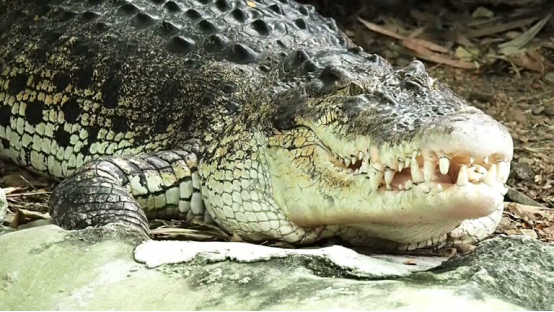
While the mother crocodile was busy moving, danger had quietly arrived. African wetlands are a stage where the strong prey on the weak, and the baby crocodiles are undoubtedly “high-protein delicacies.” Herons will drop from the sky, monitor lizards will approach quietly, and even other crocodiles may take advantage of the opportunity to sneak in.
At this time, the mother crocodile showed her other side – a fearless warrior protecting her cubs. When faced with a monitor lizard, she pounced on it without hesitation and drove the opponent away; when she encountered a small predator that wanted to attack her by surprise, she would attack it with lightning speed. This “protective” behavior is comparable to a fully armed human parent rushing into a school to protect his child.
What’s more interesting is that there is a phenomenon of “group protection” in crocodile society. Multiple female crocodiles will raise their cubs in the same water area, forming a temporary “nursery”, which greatly increases the survival rate of the young crocodiles.
Where is the father’s love? The role of the male crocodile revealed
In most animal parenting stories, fathers are often the “missing figures”, but male crocodiles occasionally participate in protecting their cubs, especially in group living areas. They not only help drive away foreign enemies, but sometimes even help carry the cubs. However, this phenomenon is not common, and scientists believe that this is more likely to occur in an environment with low resource competition.
In other words, male crocodiles often play the role of “gene transmitter” rather than “all-round nanny”.
Why do crocodiles choose “high-investment parenting”?
In the animal kingdom, crocodiles are very rare in this “high-investment parenting strategy”. Why did they evolve such a complex behavior? The answer lies in the high mortality rate of their cubs .
Data shows that even with the careful protection of the mother crocodile, less than 20% of the baby crocodiles can survive to adulthood. There are too many enemies: ospreys, monitor lizards, hyenas, and even their own kind. If the mother crocodile “lays eggs and leaves” like a turtle, the entire population would probably have disappeared in the competition. Therefore, choosing to invest more energy in protecting the cubs is a “survival gamble” they made in the long river of evolution.
From crocodiles to humans: cross-species resonance in parenting
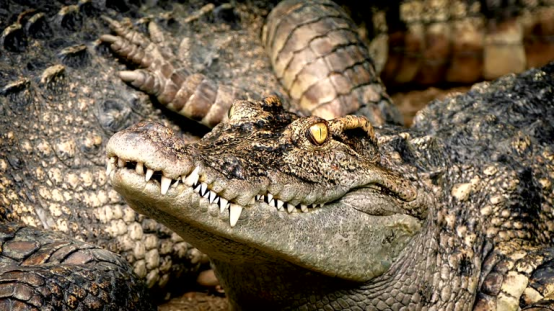
You may think that crocodiles and humans are very different, but does their parenting philosophy seem a bit familiar? Paying a great price for their offspring and not flinching in the face of danger is an instinct that transcends species boundaries.
In a sense, crocodiles remind us that parental love is not the “monopoly” of civilized society, but the deepest resonance of life.
A question for you
Next time when you see a crocodile in an animal documentary, please don’t just focus on the ferocious side of its bloody mouth, but also see if it is gently “carrying” a few baby crocodiles and walking through the mud towards the water.
If you were asked to redefine the crocodile, would it be a “cold-blooded killer” or a “super mom”? Feel free to tell us your answer in the comments section!