Educational note: This site publishes independent educational content for general readers. Articles about ecology, wildlife, conservation, pollution, animal behavior, or environmental risk are informational only and should not be treated as scientific, legal, regulatory, veterinary, medical, emergency, or professional advice. Consult qualified experts, peer-reviewed sources, and official local guidance before making decisions.
The oldest survivor on Earth
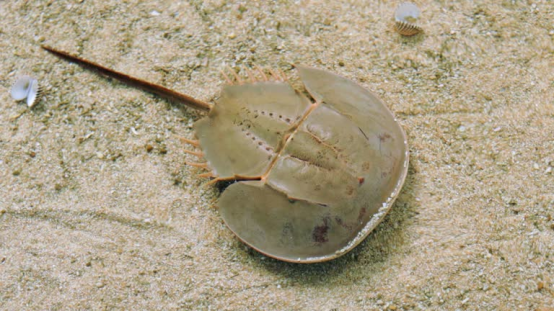
Horseshoe crabs, a marine creature with a history exceeding 400 million years, have resiliently survived five mass extinction events. Their body structure and physiology have undergone few fundamental changes, making them a valuable subject for studying the evolution of life. Horseshoe crabs are not true crabs, but rather an ancient group within the phylum Arthropoda. They inhabit intertidal zones and shallow waters, with a slow and steady life cycle. Adult horseshoe crabs typically take about ten years to reach full maturity and reproduce only a limited number of times throughout their lifetime. This slow reproductive rhythm makes them highly sensitive to environmental stress.
The unique physiological mechanism of blue blood
Horseshoe crab blood is unique in its blue color, a result of its copper-based hemocyanin, rather than the iron-based hemoglobin of mammals. Hemocyanin, which turns blue when bound to oxygen, also possesses exceptionally high immune capabilities. Horseshoe crab blood contains immune factors called lectins, which can rapidly identify and neutralize invading bacterial toxins within 0.03 seconds, a sensitivity far exceeding that of the most advanced human laboratory detection instruments. Even the smallest traces of contaminants or pathogens can be accurately detected and activated through defense mechanisms.
This ability makes horseshoe crab blood a key tool for global vaccine testing and biologics safety testing. Over 90% of vaccine and drug safety testing processes rely on horseshoe crab blood, and because of its unique antibacterial properties, the medical community considers it a “nature’s biosensor.”
Human fishing and impact on horseshoe crabs
However, the value of horseshoe crabs’ blood also poses a significant threat. Every year, approximately 500,000 horseshoe crabs are caught worldwide for blood draw experiments. The typical practice is to extract approximately one-third of their blood and then release them back into the sea. While this appears to reduce direct mortality, the loss of blood can actually severely impact the crabs’ physiological functions. Lack of blood can impair their sense of direction, memory, and reproductive capacity, making released individuals more likely to get lost, lose their ability to forage, and even struggle to complete their reproductive cycle.
Under natural conditions, May and June are the peak seasons for horseshoe crabs to come ashore for mating and spawning. Males and females come ashore in pairs to reproduce and lay their eggs on the beach. However, due to overfishing, the lack of blood has made horseshoe crabs a common sight on beaches. The overall population has declined by approximately 90% over the past three decades and continues to decline at a rate of approximately 5% per year. This threatens not only the survival of the horseshoe crabs but also the stability of coastal ecosystems.
The economic and medical value of blue blood
In medicine and biotechnology, horseshoe crab blood is considered an extremely valuable resource. A small cup of blue blood can be worth thousands of dollars in the scientific research market. Its potent antimicrobial properties provide irreplaceable assurance for vaccine safety testing. For example, in the development of COVID-19 vaccines, horseshoe crab blood is being used to ensure that the vaccine formulations are free of pathogenic bacteria or toxins, thereby protecting the health of millions of recipients.
Furthermore, research has shown that horseshoe crab blood can be used as a biosensor for water quality testing and environmental pollution monitoring. It can detect trace amounts of harmful substances at extremely low concentrations, a capability unmatched by traditional instruments. In other words, every drop of blood embodies the wisdom of millions of years of evolution and plays a key role in modern medicine.
The long-term ecological impacts of fishing
Overfishing not only affects individual physiology but also has ripple effects on the ecosystem. Horseshoe crabs play a key role in coastal ecosystems. Their eggs provide food for many birds and fish, and their activities help maintain the benthic habitat in the intertidal zone. A significant decline in horseshoe crab numbers could disrupt coastal ecosystems and affect the survival of other species.
More seriously, the absence of horseshoe crabs’ blue blood, a natural antibacterial agent, indirectly increases the survival rate of microorganisms and pathogens in the environment. This delicate ecological balance reminds us that any overexploitation of natural resources for short-term gain can lead to long-term and irreversible ecological consequences.
Sustainable use and conservation strategies
To protect horseshoe crab populations while ensuring scientific research and medical needs, scientists and environmental organizations have proposed a series of strategies:
Improve blood drawing methods : Reduce the amount of blood drawn to ensure that individuals still have sufficient physiological functions after release.
Artificial breeding and farming : Artificially breeding horseshoe crabs provides a blood source for medical experiments while reducing pressure on wild populations.
Ecological protection zones : Establish protected areas on major spawning beaches to limit human interference and ensure population reproductive success.
Research on alternative technologies : Develop blood substitutes or in vitro synthetic detection methods to reduce dependence on wild individuals.
These measures will help maintain a stable horseshoe crab population while continuing to provide them with unique value in medicine and scientific research.
The Ecological and Cultural Implications of Horseshoe Crabs
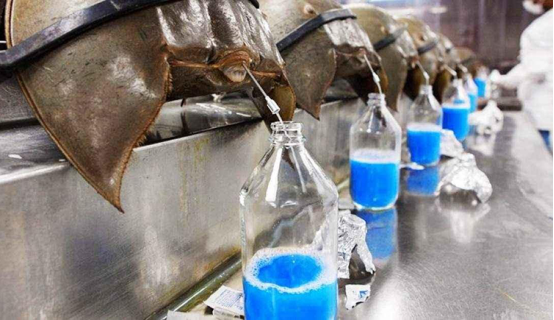
The blue blood of horseshoe crabs is not only of unique scientific value but also offers profound ecological insights: life and the environment are inextricably linked, and every organism is an irreplaceable link in the ecological chain. While humans benefit from the fruits of medical technology, they must also shoulder the responsibility of protecting biodiversity and natural resources.
This blue blood reminds us that technological progress cannot be built on the destruction of nature. Only by respecting ecological balance and adopting sustainable conservation strategies can we ensure that future generations will continue to enjoy the dual benefits of health and ecology.
Summary and Thoughts
The blue blood of horseshoe crabs is the product of millions of years of evolution and an indispensable tool in modern medicine. However, overfishing and commercial exploitation have severely threatened populations. By improving technology, establishing protected areas, and exploring alternatives, scientists and society can protect this ancient creature while ensuring scientific and medical progress.
This phenomenon is not only a biological case, but also provides humans with profound ecological ethical implications: when natural resources become high-value commodities, how to find a balance between utilization and protection will directly affect the future of the ecosystem and humanity itself.