Educational note: This site publishes independent educational content for general readers. Articles about ecology, wildlife, conservation, pollution, animal behavior, or environmental risk are informational only and should not be treated as scientific, legal, regulatory, veterinary, medical, emergency, or professional advice. Consult qualified experts, peer-reviewed sources, and official local guidance before making decisions.
In the age of social media, we are used to appreciating those stunning wildlife photography works: the moment when cheetahs chase antelopes, the roaring posture of lions on the grassland, and the scene of flamingos flying together over the lake. These works seem to solidify the most beautiful side of nature, but few people really know what stories the photographers who took these photos experienced.
Today, we are going to get closer to such a “legend” – a wildlife photographer who chooses to give his life to the wilderness. On the surface, his work is full of romance, but behind the lens, there are hidden physical limits, psychological games, and even life-and-death challenges.
Wildlife Photographers: More Than Just “Clicking the Shutter”
Many people think that a photographer’s job is just to “press the shutter”, but in the field of wildlife photography, this statement is almost an insult. There are no comfortable studios here, only vast grasslands, dense jungles, scorching sunshine, and even deadly predators.
A true master must first master the basic skills of composition and light and shadow, but this is far from enough. The ability to capture is their core competitiveness. Wild animals will not cooperate with you to pose, and all wonderful moments are fleeting. Whether you can complete the adjustment, composition, and focus within one second determines the success or failure of the work.
In addition, they need extremely high psychological qualities. Facing potential dangers, how to stay calm and capture the best pictures at the same time is an art.
Dealing with Wild Animals: Sense of Boundaries is the First Principle
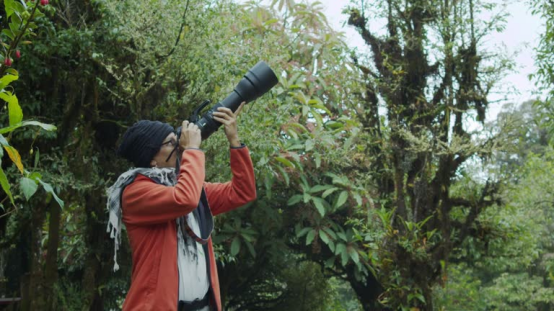
You may have heard the saying: “Wild animals usually don’t attack humans.” In theory, this is true, but the reality is more complicated. A lion won’t pounce on a human for no reason, but if you cross its territorial line, that’s another matter.
Professional photographers understand this very well. They maintain a delicate balance with animals: getting close but not offending; integrating but not disturbing . It often takes months or even years to build this trust.
Experienced photographers can even distinguish the subtle body language of animals, such as the frequency of a cheetah’s tail swinging, which means it is relaxed or alert; the amplitude of an elephant’s ears flapping may indicate that it is sending a “warning signal.” Ignoring these details may turn a photography trip into an escape drill.
Adventure and humor: the photographer’s “alternative daily life”
In addition to danger, wildlife photography also has its absurd and humorous side. Many photographers like to laugh at themselves: “Photographing animals is more about photographing our own embarrassment.” Imagine that you wait patiently for three hours to capture a close-up of a cheetah, but the next second it puts its nose directly to the lens and stares at you curiously – this is their daily life.
Some people even “harvested” unexpected friendships during their travels. For example, a naughty hyena would wander around the photographer’s camp and even follow him around like a pet dog. Sounds heartwarming? Don’t forget that this “friend” might also take your food, or even your equipment, as a midnight snack when he’s hungry.
Beyond skills: The importance of survivability
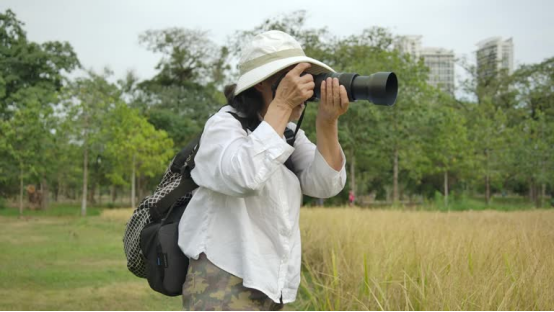
Many people overlook the fact that wildlife photography not only tests shooting skills, but is also a tough battle of physical strength and survival.
These photographers usually need to hide for a long time, sometimes for a whole day, and exposure to the scorching sun, mosquito bites, dehydration and heatstroke are the norm. Even at night, it is not necessarily safe, because nocturnal predators are watching you in the dark, and your tent is the only “fortress”.
Some photographers will deliberately do physical training. The reason is simple: once the situation gets out of control, you must at least run faster than your companions. Behind this half-joking remark, there is a real survival logic.
Peeping and being peeped at: the two-way curiosity between humans and animals
In nature, photographing animals is essentially a form of “voyeurism”. But in many cases, photographers also become the ones being “voyeurized”.
There are cases where lions will quietly circle behind the photographer and curiously observe these strange “two-legged animals”; elephants will touch the photographic equipment with their trunks, as if checking whether you have brought a “pass”; there are even some small primates that simply steal the photographer’s lens cap and run up a tree to use it as a toy.
This two-way observation, to some extent, breaks the human sense of superiority. We are not the masters of nature, but just a link in the ecological network.
Photographer’s Gear Myth
Many people have romantic visions of wildlife photography, imagining them carrying top-of-the-line telephoto lenses and driving luxury SUVs, but the reality is that most photographers try to travel light: a durable vehicle, a camera, a basic set of lenses, and a few days of food and water.
Why don’t you bring a gun? Because most professional photographers insist on one belief: I am here to observe, not to intervene. They believe that the trust between humans and animals is established in long-term peaceful coexistence, not maintained by force.
The temptation and cost of a career
For many people, this job is like a dream: spending time with animals every day, taking photos that shock the world, and even becoming famous overnight. But the reality is that it is lonely and dangerous.
Long-term outdoor filming means being away from their families and facing unexpected health risks. Snake bites, tropical diseases and food shortages are all part of their daily lives.
As for the salary? Unless you are a top photographer, most people don’t earn much, and may even need to pay out of their own pockets to maintain their shooting trips. In other words, this is a path driven by passion , not money.
Why are we drawn to these photos?
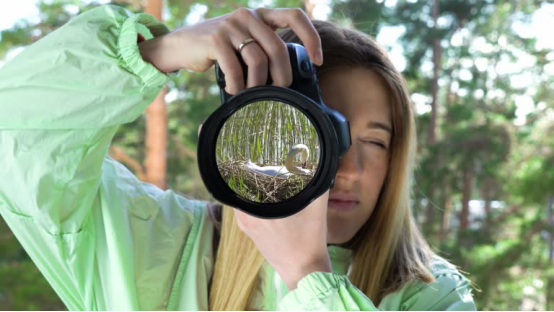
When a photo of a cheetah galloping appears on social media, thousands of people like it. We watch these images because they satisfy our yearning for nature and our romantic fantasy of wildness.
But the value of these photos is not only aesthetic, they also tell a deeper story: how humans can understand and record nature without destroying it. This is a kind of communication across species and a reverence for the natural order.
Summary: Photography is a bridge between man and nature
Wildlife photography is not an adventure game, nor is it just an art. It is a connection between man and nature, and an exploration based on respect for life.
The next time you see a stunning close-up of an animal on Instagram or National Geographic, remember: behind it may be a photographer who endured heat, loneliness, and even risked his life in the wilderness.
Are you willing to give everything for such a shot?
Tell us in the comments: If you were given the opportunity to photograph wildlife on the African savannah, would you choose to brave the journey or sit back and enjoy the view from the safety of home?