Educational note: This site publishes independent educational content for general readers. Articles about ecology, wildlife, conservation, pollution, animal behavior, or environmental risk are informational only and should not be treated as scientific, legal, regulatory, veterinary, medical, emergency, or professional advice. Consult qualified experts, peer-reviewed sources, and official local guidance before making decisions.
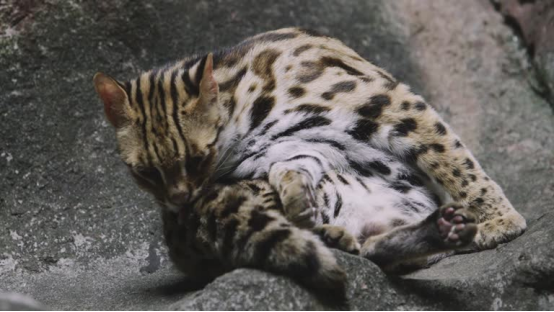
When you first see a black-footed cat, you might think it’s just a cute little house cat, with soft fur and innocent eyes, which makes it impossible to associate it with “danger”. In fact, this little guy, weighing only 500 grams to 1.5 kilograms, is one of the most deadly nocturnal hunters in Africa. It looks sweet, but in its bones it is the embodiment of efficient killing in nature.
Why can such a “mini cat” survive in the desert? How did it become a top predator in such a harsh environment? This article will give you a deeper understanding of this black-footed cat known as the “Desert Death”.
Although small in size, it has “killer-level” combat power
The black-footed cat is the second smallest wild cat in the world, second only to the rusty-spotted cat. Adult black-footed cats usually weigh 2 to 5 pounds (about 0.9 to 2.3 kilograms) and are only 14 to 20 inches (about 35 to 50 centimeters) long, smaller than an ordinary house cat.
However, this petite body hides an amazing hunting efficiency – its hunting success rate is as high as 60% , almost three times that of a lion! Every day, it can catch 10 to 14 prey, ranging from insects, small rodents to birds, all of which are its meals.
In other words, if you put it on the same grassland with a male lion, from a statistical point of view, the black-footed cat is a more stable “winner”.
Why is it so “efficient”?
Black-footed cats do not rely on brute force to win, but rather on a precise strategy and natural adaptability:
1. The Night Hunter’s Talent
The temperature in the African desert is extremely high during the day, even exceeding 40°C (104°F). In order to avoid the heat, the black-footed cat rests in caves or bushes almost all day long and does not move until night falls.
This nocturnal lifestyle not only helps it avoid heat stroke, but also allows it to approach prey quietly at night.
2. Advantages of short stature
Its compact body and short limbs allow it to easily get into rodent burrows or hide in low bushes, allowing it to quickly move through the complex environment of the desert and even use the terrain to ambush prey.
3. Amazing endurance
Can you imagine? This palm-sized kitten can walk 6 miles (about 10 kilometers) or more in one night just to find a meal. Given its size, this is equivalent to a human running two marathons in one night.
The “Night Killer” of the African Desert
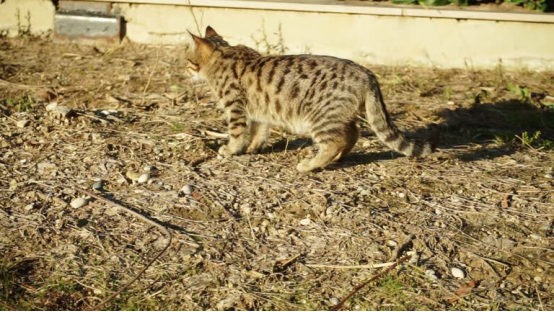
Many documentaries call the black-footed cat “the deadliest kitten in Africa,” and this is not an exaggeration. Its high success rate allows it to play an important role in desert ecology: controlling the number of rodents and balancing the food chain.
What’s even more amazing is that it not only has near-perfect stealth skills, but also has a strong desire to hunt. Once it finds its prey, the black-footed cat will remain amazingly patient – sometimes lying in wait for several minutes or even more than ten minutes until the best time to catch it.
It pounces extremely quickly, giving its prey almost no chance to react. Researchers have found that the average time a black-footed cat takes to hunt is less than a few seconds, a level of efficiency comparable to that of a professional assassin in the cold weapon era.
Diet menu: From scorpions to birds
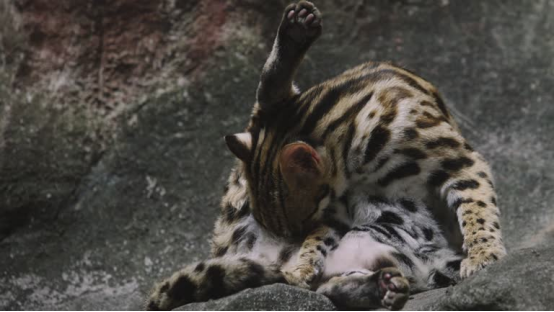
The black-footed cat’s diet is quite varied:
Small rodents : These are its main source of food.
Birds : Especially ground-dwelling birds that roost at night, which often become “midnight snacks” for black-footed cats.
Insects : This includes beetles, ants, and even scorpions. Yes, it dares to eat scorpions and can avoid the sting!
This “broad-spectrum” eating strategy allows it to survive in the desert without starving to death due to the monotony of food.
Cute on the outside, hardcore on the inside
The black-footed cat is born with a harmless face: round eyes, soft fur, and a cute body that makes people want to “hug the cat”. Many people who see it for the first time even think it is an abandoned pet.
But its personality is completely different from its appearance. The black-footed cat is extremely independent, territorial, and very aggressive. In the wild, it will not hesitate to attack an animal several times larger than itself. If threatened, it will stand up its hair, let out a low roar, or even pounce on the opponent without showing any weakness.
The Mystery of Reproduction and Family Life
Because the black-footed cat is extremely secretive, scientists have limited knowledge of its reproductive habits. However, it is known that females have an estrus period once a year, usually in the spring. The gestation period is about 63 days, and each litter gives birth to 1 to 2 cubs.
The mother cat will choose a secluded cave or rock crevice to raise her kittens and will move frequently during the first few weeks to avoid being discovered by predators.
Why you might never see it?
The black-footed cat is not only small in size, but also almost entirely active at night. Coupled with the vastness and harsh conditions of the African desert, it has become one of the most difficult cats to photograph in the world. Even experienced wildlife photographers may spend months or even years to take a clear photo.
This also explains why the BBC documentary “Deadly Little Cats” amazed audiences around the world after it was broadcast – it not only unveiled the mystery of this little killer, but also made people re-examine the complexity and wonder of desert ecology.
How should humans protect this “little assassin”?
Although the black-footed cat is currently classified as “near threatened” on the International Union for Conservation of Nature (IUCN) Red List of Threatened Species, its living environment is still threatened. The main reasons include:
Habitat destruction : Overgrazing in deserts and land degradation have caused them to lose their hiding places.
Disruption of the predation chain : Overhunting of rodents indirectly affects the food source of the black-footed cat.
Poisoning risk : Pesticides and poison baits pose a potentially lethal threat to them.
Protecting the black-footed cat is not only about saving a species, but also about maintaining the balance of the desert ecology.
Why are we so fascinated by it?
Perhaps it is because of the contrast in it: harmless in appearance, but deadly in behavior; small in size, but able to survive so tenaciously in the desert. It is like a secret code of nature, reminding us that survival is not a competition of size, but a contest of strategy and adaptability.
Next time you see a photo of a black-footed cat, remember that this is not just a “cute kitty” but the silent ruler at the top of the desert food chain.
If you had the chance to see a black-footed cat in the wild, would you take a photo or just observe?
Let us know your choice in the comments section.