Educational note: This site publishes independent educational content for general readers. Articles about ecology, wildlife, conservation, pollution, animal behavior, or environmental risk are informational only and should not be treated as scientific, legal, regulatory, veterinary, medical, emergency, or professional advice. Consult qualified experts, peer-reviewed sources, and official local guidance before making decisions.
The Great Barrier Reef, one of the planet’s most extraordinary natural wonders, is facing an unprecedented crisis. What was once a vibrant underwater metropolis teeming with life is now a stark symbol of our planet’s changing climate. The widespread coral bleaching events are not isolated incidents; they are a desperate wake-up call for the global community. This guide delves into the core issues plaguing the reef, explains the science behind its decline, and outlines the critical conservation strategies that offer a glimmer of hope for its survival. Understanding this complex challenge is the first step toward meaningful action.
Understanding the Great Barrier Reef: A Global Treasure at Risk
The Great Barrier Reef is not just a single reef but a colossal mosaic of nearly 3,000 individual reefs and 900 islands stretching for over 2,300 kilometers. Its sheer scale makes it visible from space, but its true value lies in its staggering biodiversity. It is a cornerstone of marine life, providing a home to thousands of species of fish, turtles, sharks, and mollusks.
The Why: The Foundation of a Marine Ecosystem
The reef’s foundation is built by tiny animals called coral polyps. These polyps secrete calcium carbonate to form a hard skeleton. Crucially, they live in a symbiotic relationship with microscopic algae called zooxanthellae, which live within their tissues. The zooxanthellae photosynthesize, providing the coral with up to 90% of its energy and giving it its vibrant colors. In return, the coral provides the algae with a protected environment and the compounds they need for photosynthesis. This delicate partnership is the engine that powers the entire reef ecosystem.
A World Heritage Site in Peril
Recognized as a UNESCO World Heritage Site in 1981, the Great Barrier Reef is celebrated for its immense natural beauty and scientific importance. However, this status also brings a responsibility to protect it. The recent and severe bleaching events have put this status under review, highlighting the global significance of its decline and the international failure to adequately address the root causes.

The Primary Threat: Unpacking Coral Bleaching
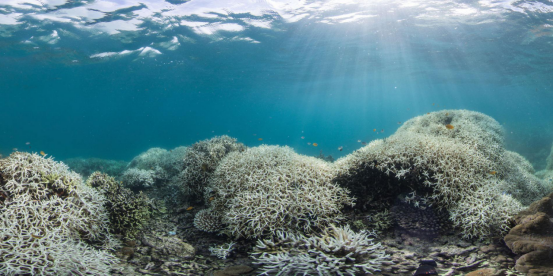
Coral bleaching is the most visible and devastating threat to the Great Barrier Reef. It is a stress response that occurs when the symbiotic relationship between corals and their resident algae breaks down. When corals turn stark white, they are not dead—they are starving and on the brink of collapse.
The Science Behind the Bleaching Process
When ocean temperatures rise even 1-2°C (1.8-3.6°F) above the normal summer maximum for an extended period, the zooxanthellae algae begin to produce reactive oxygen species that are toxic to the coral. As a defense mechanism, the coral polyps expel the algae from their tissues. Without the algae, the coral loses its primary food source and its color, revealing the white calcium carbonate skeleton beneath. If temperatures return to normal quickly, corals can sometimes recover their algae and survive. However, prolonged or repeated thermal stress leads to mass coral mortality.
Climate Change: The Undeniable Culprit
The increasing frequency and severity of mass bleaching events are directly linked to global climate change, driven by the burning of fossil fuels. The ocean has absorbed over 90% of the excess heat trapped by greenhouse gases, leading to unprecedented marine heatwaves that trigger these devastating events. What was once a rare phenomenon is now becoming a recurring, almost seasonal, disaster.

The Cascade Effect: Ripple Effects of a Dying Reef
The death of the Great Barrier Reef is not just an ecological tragedy; it triggers a domino effect with far-reaching consequences for biodiversity, economies, and coastal communities.
Devastating Loss of Marine Biodiversity
Coral reefs are often called the “rainforests of the sea” for good reason. They support an estimated 25% of all marine species. When the corals die, the complex three-dimensional structure they provide disappears, eliminating essential habitat, breeding grounds, and feeding areas for countless organisms. Fish populations decline, which in turn affects predators like sharks and dolphins, leading to a collapse of the entire food web.
Economic Collapse for Coastal Communities
The Great Barrier Reef contributes billions of dollars to the Australian economy and supports tens of thousands of jobs, primarily through tourism and fishing. Bleached, dying reefs are a major deterrent for tourists, threatening the livelihoods of tour operators, dive instructors, and hotel staff. Likewise, the collapse of fish stocks directly impacts commercial and recreational fishing industries that depend on a healthy reef.

A Call to Action: Strategies for Reef Conservation
While the situation is dire, surrender is not an option. A multi-faceted approach combining global policy, scientific innovation, and individual action is essential to give the reef a fighting chance.
Global and Governmental Initiatives
The most critical action is to aggressively combat climate change by reducing global greenhouse gas emissions, as outlined in the Paris Agreement. On a local level, governments must improve water quality by reducing agricultural runoff (pesticides, fertilizers), manage coastal development, and effectively police Marine Protected Areas (MPAs) to curb illegal fishing and pollution.
Individual Responsibility: A Conservation Checklist
Every individual can contribute to reef conservation. Here is a checklist of actionable steps:
- Reduce Your Carbon Footprint: Minimize energy consumption, use public transport, switch to renewable energy, and adopt a more plant-based diet.
- Choose Sustainable Seafood: Use guides like the Monterey Bay Aquarium Seafood Watch to select fish that are caught or farmed in environmentally friendly ways.
- Practice Responsible Tourism: If you visit a reef, choose eco-certified tour operators, use reef-safe sunscreen (without oxybenzone and octinoxate), and never touch or stand on coral.
- Support Conservation Organizations: Donate to or volunteer with reputable organizations working on reef restoration and advocacy.
- Stay Informed and Advocate: Educate yourself and others about the threats to our oceans and pressure political leaders to enact stronger environmental policies.

Expert Advice: Pro Tips for Marine Conservation
Beyond the basics, marine biologists and conservation experts offer advanced advice for those looking to make a greater impact. These strategies focus on systemic change and informed decision-making.
Focus on Policy, Not Just Plastic Straws
While reducing personal plastic use is commendable, the scale of the climate crisis requires systemic change. The most impactful action an individual can take is political. Vote for leaders with strong environmental platforms. Support policies that transition economies away from fossil fuels and towards renewable energy. Join or support advocacy groups that lobby for climate action at national and international levels. Your vote and your voice are your most powerful tools.
Invest Ethically
Review your investments, including your retirement accounts. Many funds unknowingly invest in fossil fuel companies and other industries detrimental to the environment. Consider shifting your investments to Environmental, Social, and Governance (ESG) funds that prioritize sustainability. Divesting from harmful industries sends a powerful economic signal for change.

Comparing Conservation Approaches: A Strategic Overview
Different strategies are being employed to save coral reefs, each with its own benefits and limitations. Understanding these approaches helps clarify where resources and efforts are best directed.
| Conservation Strategy | Description | Pros | Cons |
|---|---|---|---|
| Global Climate Action | Reducing greenhouse gas emissions through international agreements (e.g., Paris Agreement) and national policies. | Addresses the root cause of the problem (ocean warming). Benefits the entire planet. | Extremely slow political process. Requires global cooperation. Effects are not immediate. |
| Marine Protected Areas (MPAs) | Designating specific ocean areas where human activity like fishing and mining is restricted. | Reduces direct stressors, allowing reefs to build resilience. Protects biodiversity hotspots. | Does not protect against climate change. Can be difficult and expensive to enforce. |
| Active Reef Restoration | Scientists actively grow corals in nurseries and transplant them onto degraded reefs (“coral gardening”). | Can locally accelerate recovery. Advances scientific understanding of coral resilience. | Extremely expensive and labor-intensive. Not scalable to the size of the GBR. A “band-aid” if the root cause isn’t fixed. |
| Water Quality Improvement | Reducing land-based runoff of pollutants, sediments, and nutrients from agriculture and development. | Reduces a key secondary stressor, making corals more resilient to heat stress. | Requires significant changes in land-use practices. Can be politically challenging. |
Frequently Asked Questions (FAQ)
- Is the Great Barrier Reef already dead?
- No, the Great Barrier Reef is not dead, but it is severely damaged. Large sections have suffered from mass bleaching and mortality, but other areas remain alive and some have shown signs of resilience and recovery. However, it is in a critical state and requires urgent action to prevent its complete collapse.
- Can coral reefs fully recover from bleaching?
- Yes, corals can recover from a bleaching event if the water temperatures return to normal in a timely manner and other stressors are low. The zooxanthellae can repopulate the coral’s tissue. However, recovery can take years to decades, and with the increasing frequency of marine heatwaves, reefs are often not given enough time to recover before being hit again.
- What is the single biggest threat to coral reefs worldwide?
- The overwhelming scientific consensus is that climate change—specifically the rising ocean temperatures it causes—is the single greatest threat to coral reefs globally. While local threats like pollution and overfishing are significant, they are secondary to the existential threat posed by global warming.
- How does my choice of sunscreen affect the reef?
- Certain chemicals commonly found in sunscreens, such as oxybenzone and octinoxate, have been shown to be toxic to corals. They can induce bleaching, damage coral DNA, and disrupt their reproduction. When swimming near reefs, it is crucial to use “reef-safe” mineral-based sunscreens containing zinc oxide or titanium dioxide, or to wear protective clothing like a rash guard.