Educational note: This site publishes independent educational content for general readers. Articles about ecology, wildlife, conservation, pollution, animal behavior, or environmental risk are informational only and should not be treated as scientific, legal, regulatory, veterinary, medical, emergency, or professional advice. Consult qualified experts, peer-reviewed sources, and official local guidance before making decisions.
The prehistoric world was a realm of colossal predators and equally formidable prey. Among the most iconic survivors were the armored behemoths – a diverse group of creatures, from the spiky Ankylosaurus to the club-tailed Glyptodon, that perfected the art of defense. These “living fortresses” weren’t just resilient; they were dominant forces in their respective ecosystems, carving out niches through sheer evolutionary ingenuity. This ultimate guide delves into the profound evolutionary legend of these armored giants, uncovering the scientific rationale behind their formidable protection, their strategies for survival and dominance, and the enduring legacy they leave in the fossil record.
Understanding the rise and reign of armored behemoths requires a deep dive into millions of years of evolutionary pressures. What compelled life to evolve such heavy, often cumbersome, defensive structures? How did these adaptations allow them to not just survive, but thrive amidst the most terrifying carnivores Earth has ever known? We will explore the “why” behind their armor, dissect the “what” of their anatomical fortifications, and analyze the “how” of their ecological success, providing a comprehensive overview of these incredible ancient creatures.
The Evolutionary Imperative: Why Armor Became Essential
The development of extensive body armor in prehistoric animals was not a random occurrence but a direct response to intense environmental pressures, primarily predation. In an era where predators grew larger and more specialized, the ability to withstand attacks became a critical factor in survival and reproductive success. This evolutionary arms race drove the diversification of defensive strategies, with armor emerging as one of the most effective. The underlying principle was simple: protection from physical harm directly increased an individual’s chances of reaching maturity and passing on its genes.
Early Forms and Environmental Pressures
The earliest armored vertebrates appeared hundreds of millions of years ago, long before the dinosaurs. Early fish developed bony plates, and even some amphibians and reptiles in the Permian period sported rudimentary osteoderms – bony deposits within the skin. These initial forms of armor were often diffuse and less organized than the intricate shields seen later. The environmental pressures were diverse, ranging from aquatic predators to early terrestrial carnivores. As ecosystems became more complex and competition for resources intensified, the selective pressure for robust defense mechanisms grew exponentially. This period saw the foundational development of the genetic and developmental pathways that would later give rise to the sophisticated armor of the Mesozoic and Cenozoic eras.
The Predator-Prey Arms Race
The evolution of armor is a classic example of a co-evolutionary arms race. As prey animals developed better defenses, predators evolved more potent offensive capabilities – stronger jaws, sharper claws, or more cunning hunting strategies. This continuous feedback loop pushed both sides to new extremes. For instance, the rise of large theropod dinosaurs like Tyrannosaurus Rex likely spurred the development of heavier, more comprehensive armor in herbivorous dinosaurs like Ankylosaurs. The ‘what’ of the armor (spikes, clubs, plates) was often dictated by the ‘who’ of the predator it was designed to deter. This dynamic explains the incredible variety and specialization of armored forms across different geological periods and geographical locations, each tailored to its specific threat environment.

Architects of Defense: The Anatomy of Armored Behemoths
Armored behemoths were masterpieces of natural engineering, featuring a bewildering array of defensive anatomical features. Their bodies were often configured not just for passive protection but also for active defense, turning them into mobile fortresses. From head to tail, every part of their anatomy seemed purpose-built for survival against the most formidable adversaries. Understanding these structures provides insight into their ecological success and the sheer power of natural selection.
Dermal Armor and Specialized Structures
The most striking feature of these animals was their dermal armor, composed of osteoderms – bony plates embedded within the skin. These varied greatly in form and function:
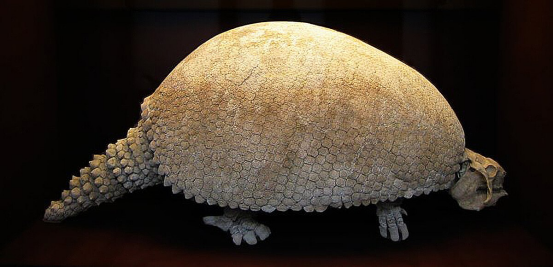
- Scutes and Plates: Flat or dome-shaped bony plates covered the backs and flanks of many armored dinosaurs (e.g., Ankylosaurus, Stegosaurus) and mammals (e.g., Glyptodon). These provided a broad shield against biting and clawing attacks.
- Spikes and Thorns: Some armored creatures, like Nodosaurids, sported sharp, outward-projecting spikes that made them difficult to grasp and inflict injury upon an attacker. These often lined the sides of the body and neck.
- Tail Clubs and Thagomizers: Perhaps the most iconic offensive-defensive weapons were found on the tails. Ankylosaurs possessed massive bony tail clubs capable of delivering crushing blows, while Stegosaurus famously wielded four deadly spikes (thagomizers) at the end of its tail, used to ward off predators.
- Bony Skulls and Eyelid Armor: Even the head was often heavily armored, with thick bony skulls and sometimes even bony plates protecting the eyelids, as seen in some Ankylosaurids, providing comprehensive protection.
Behavioral Defenses and Adaptations
Beyond passive armor, many armored behemoths employed active behavioral strategies to maximize their protection:
- Crouching and Shielding: When threatened, many armored herbivores would crouch low to the ground, presenting their heavily armored backs and sides while protecting their vulnerable undersides. This made them incredibly difficult targets for predators.
- Tail Swiping: Creatures with tail clubs or spikes would actively swing their tails to deter or injure attackers. The precision and force required suggest a level of behavioral sophistication.
- Herd Formation: While not exclusive to armored animals, some species likely formed herds, providing additional safety through numbers and collective defense, with the most heavily armored individuals potentially forming an outer perimeter.
- Burrowing: Smaller armored creatures, or the young of larger ones, might have utilized burrows for refuge, adding another layer of defense against predators.

Reigning Giants: How Armored Creatures Dominated
The success of armored behemoths wasn’t solely due to their impenetrable defenses. Their dominance in various prehistoric ecosystems stemmed from a combination of effective protection, efficient resource utilization, and successful reproductive strategies. They occupied crucial niches as primary consumers, shaping the vegetation and influencing the food web dynamics of their time. Their ability to deter predators meant less energy spent on evasion and more on foraging and reproduction, contributing to their long evolutionary run.
Dietary Niches and Feeding Strategies
Most armored behemoths were herbivores, specializing in consuming tough, fibrous plant material. Their unique dental structures and digestive systems allowed them to process vegetation that might have been inaccessible to other herbivores.
- Low Browsers: Many armored dinosaurs, like Ankylosaurs, had broad muzzles and peg-like teeth, indicating they were low-level browsers, feeding on ferns, cycads, and other ground-level plants.
- Specialized Grinders: Mammalian armored behemoths, such as Glyptodons, possessed complex cheek teeth suitable for grinding tough grasses and sedges, similar to modern ungulates.
- Fermentation: Like many large herbivores today, they likely had extensive gut fermentation systems to extract maximum nutrients from their diet, supporting their large body size.
Their ability to efficiently exploit available plant resources, combined with their robust defenses, allowed them to maintain large populations in environments where other less protected herbivores might have struggled.
Habitat Range and Ecological Impact
Armored behemoths occupied a wide range of habitats across different continents and geological periods. From the lush forests of the Late Cretaceous to the open grasslands of the Pleistocene, their adaptability was remarkable.
- Global Distribution: Fossils of armored dinosaurs have been found across North America, Asia, Europe, and even Antarctica, indicating a widespread presence. Glyptodons were prominent in South America and later migrated into North America.
- Ecosystem Engineers: As large herbivores, they played a significant role in shaping plant communities through grazing and trampling, similar to modern elephants or bison. Their presence would have influenced nutrient cycling and vegetation structure.
- Niche Partitioning: Within their ecosystems, different armored species likely occupied slightly different niches, minimizing direct competition and allowing for greater biodiversity among armored forms.
Social Dynamics and Reproductive Success
While direct evidence for social behavior is scarce in the fossil record, inferences can be made:
- Group Living: Some fossil beds show multiple individuals of armored dinosaurs, suggesting they might have lived in groups, which could offer additional protection against predators, especially for juveniles.
- Parental Care: Given their long development times and the energy investment in armor, it’s plausible that some species engaged in parental care, protecting their young until they developed sufficient defenses.
- Mating Displays: While speculative, some armor elements, particularly spikes or distinctive patterns on plates, might have played a role in species recognition or mating displays, similar to horns or antlers in modern animals.
The End of an Era: Decline, Extinction, and Legacy
Even the most perfectly armored creatures eventually faced their demise. The reign of armored behemoths, though long and successful, was not eternal. Their decline and eventual extinction were often tied to large-scale environmental changes and shifts in ecological dynamics, rather than a failure of their defensive strategies alone. The story of their end is as important as their rise, offering lessons in resilience and vulnerability in the face of planetary shifts.
Environmental Shifts and Climate Change
The extinction of many armored dinosaurs at the end of the Cretaceous period, like most non-avian dinosaurs, is primarily attributed to the asteroid impact and subsequent global climate disruption. Rapid climate cooling, widespread wildfires, and long-term ecological collapse proved too much even for these robust creatures. Similarly, many armored mammals, like the Glyptodons, disappeared during the late Pleistocene extinction events, likely due to a combination of climate change, habitat loss, and increasing pressure from early human hunters. Their specialized diets and large body sizes might have made them particularly vulnerable to such rapid environmental changes.
Modern Paleontological Insights
The study of armored behemoths continues to be a vibrant field in paleontology. Each new fossil discovery refines our understanding of their evolution, biomechanics, and ecology. Advanced imaging techniques, such as CT scans, allow paleontologists to peer inside fossilized armor, revealing blood vessel networks, nerve pathways, and even growth rings, providing unprecedented detail about their lives. Ongoing research explores:
- Armor Biomechanics: How did the armor withstand impacts? What were its material properties?
- Locomotion: How did such heavily built animals move and maneuver?
- Paleoecology: What was their precise role in ancient food webs and ecosystems?
- Evolutionary Relationships: Clarifying the phylogenetic links between different armored groups.
These studies not only illuminate the past but also inform our understanding of adaptation, extinction, and the long-term impacts of environmental change on biodiversity.
Expert Insights: Pro Tips for Understanding Prehistoric Armor
For those fascinated by the incredible defenses of prehistoric armored behemoths, here are some pro tips to deepen your understanding and appreciation:
- Think Beyond the Shield: Don’t just see armor as a passive shield. Consider how it integrated with behavior, diet, and locomotion. A tail club isn’t just bone; it’s a weapon wielded with precision.
- Context is Key: Always consider the environmental context. What predators were present? What plants were available? Armor evolved in response to specific challenges.
- Biomechanics Matter: Research the biomechanical studies of armor. How did bone structure, keratin layers, and muscle attachments contribute to its effectiveness? Look into finite element analysis applied to fossil armor.
- Comparative Anatomy: Compare different types of armor across species and eras (e.g., Ankylosaurus vs. Glyptodon vs. Stegosaurus). What similarities and differences emerge, and what do they tell us about convergent evolution?
- Follow the Latest Discoveries: Paleontology is an active field. Follow reputable paleontological journals, museum blogs, and university research pages for the newest fossil finds and scientific interpretations.
Armored Giants Comparison: Key Species Overview
To illustrate the diversity and specialization among armored behemoths, here’s a comparison of some prominent examples:
| Feature | Ankylosaurus (Dinosaur) | Glyptodon (Mammal) | Stegosaurus (Dinosaur) |
|---|---|---|---|
| Era | Late Cretaceous | Pleistocene | Late Jurassic |
| Primary Armor Type | Osteoderms (scutes, plates), massive tail club | Solid, dome-shaped carapace (fused osteoderms), tail rings/club | Large dorsal plates, four tail spikes (thagomizers) |
| Size (Approx.) | Up to 6-8 meters long, 4-8 tons | Up to 3.3 meters long, 2 tons | Up to 9 meters long, 5 tons |
| Diet | Low-browsing herbivore (ferns, cycads) | Grazing herbivore (grasses, sedges) | Low-browsing herbivore (ferns, cycads, conifers) |
| Key Defensive Strategy | Crouch and swing tail club | Retract into carapace, armored tail for defense | Tail spikes (thagomizers) for active defense |
| Geographic Range | North America, Asia | South America, North America | North America, Europe |
Frequently Asked Questions (FAQ)
- What is an armored behemoth, and what are some examples?
- An armored behemoth refers to a large prehistoric animal equipped with extensive bony or scaly protection against predators. Key examples include the dinosaur Ankylosaurus, known for its full-body armor and tail club, and the mammalian Glyptodon, famous for its massive, turtle-like carapace. Other examples include Stegosaurus with its plates and tail spikes, and various nodosaurs.
- Why did prehistoric animals evolve such heavy armor?
- Heavy armor evolved primarily as a defense mechanism against large and powerful predators in an ongoing evolutionary arms race. As predators developed more effective hunting tools (stronger jaws, sharper claws), prey animals responded by evolving more robust protection to improve their chances of survival and reproduction. Environmental pressures and resource competition also played a role.
- How effective was the armor of these creatures against predators?
- The armor was highly effective. For instance, the thick osteoderms of Ankylosaurs could withstand significant force, making them difficult targets for even the largest theropods. Their tail clubs were powerful offensive weapons capable of breaking bones. Similarly, the Glyptodon’s fused carapace offered an almost impenetrable shield. While not foolproof, their defenses significantly reduced predation rates.
- Did armored behemoths have any weaknesses despite their protection?
- Yes, despite their formidable defenses, armored behemoths had vulnerabilities. Their undersides were typically less protected, and some smaller species might have had softer areas. Their heavy armor also meant slower movement, making them potentially susceptible to ambush predators or prolonged sieges. Furthermore, specialized predators might have developed techniques to exploit specific weaknesses, and rapid environmental changes often proved to be their ultimate undoing.
- Are there any modern animals that resemble prehistoric armored behemoths?
- While no modern animal matches the sheer scale or specific armor types of dinosaurs like Ankylosaurus, there are several contemporary creatures that exhibit similar defensive strategies. Armadillos, with their bony scutes and ability to roll into a ball, are often cited as living relatives of the Glyptodon. Pangolins and crocodiles also possess varying degrees of dermal armor, showcasing the enduring evolutionary success of protective coverings.