Educational note: This site publishes independent educational content for general readers. Articles about ecology, wildlife, conservation, pollution, animal behavior, or environmental risk are informational only and should not be treated as scientific, legal, regulatory, veterinary, medical, emergency, or professional advice. Consult qualified experts, peer-reviewed sources, and official local guidance before making decisions.
The Evolutionary Mastery of the Big-Eared Sand Lizard
The Big-Eared Sand Lizard (Phrynocephalus mystaceus) is a testament to nature’s ability to engineer life in extreme conditions. Inhabiting the shifting dunes of Central Asian deserts, this reptile has developed a survival philosophy centered on thermal regulation and aggressive territoriality. Unlike species that seek shade, these lizards utilize the sand as both a shield and a tool for survival.
Adaptations for Arid Environments
To survive scorching surface temperatures, the lizard employs a “sand-swimming” technique. By vibrating its body, it can rapidly submerge itself into the cool sub-strata of the dune. Furthermore, its specialized eyelids prevent sand infiltration, ensuring its vision remains clear even during intense windstorms.

The Language of Aggression: Territorial Displays
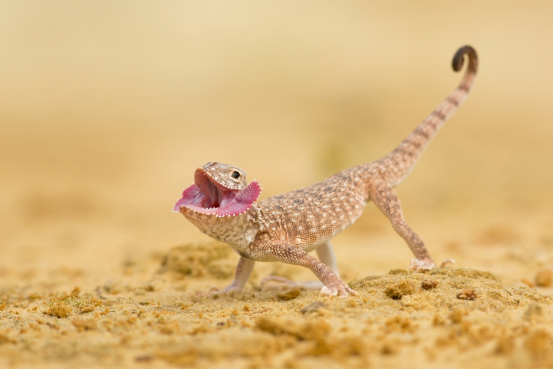
The “Big-Eared” moniker originates from the lizard’s most striking feature: the fleshy, skin-covered folds at the corners of its mouth. When threatened or challenged for territory, the lizard engages in a dramatic display, inflating these flaps to appear significantly larger and more intimidating to rivals and predators alike.
The Mechanics of the Display
This display is not merely visual; it is a calculated physiological response. By flooding the oral folds with blood, the lizard creates a vibrant, menacing silhouette. This behavior serves as a primary deterrent, often preventing physical conflict and preserving energy—a vital resource in an environment where food scarcity is the norm.
| Display Type | Trigger | Primary Purpose |
|---|---|---|
| Oral Inflation | Predator Detection | Intimidation/Size increase |
| Tail Curling | Conspecific Rivalry | Territorial signaling |
| Sand Submersion | Extreme Heat | Thermal regulation |

The Love Game: Reproductive Strategies in the Dunes
Reproduction in the desert is a high-stakes gamble. The Big-Eared Sand Lizard has evolved a complex courtship ritual that balances the need for mating with the constant threat of predation. Males compete for dominance through ritualized posturing, ensuring that only the most fit individuals pass on their genes.
Pro Tips for Observing Desert Lizards
- Timing is Everything: Observe during the early morning or late afternoon when surface temperatures are tolerable for both the lizard and the observer.
- Use Optics: Maintain a significant distance; these lizards are highly sensitive to vibrations and shadows, which they interpret as predatory threats.
- Patience: Territorial displays are often preceded by long periods of stillness. Do not mistake inactivity for an absence of life.

Frequently Asked Questions (FAQ)
- Why does the Big-Eared Sand Lizard inflate its mouth?
- The inflation is a defensive and territorial mechanism. It makes the lizard appear larger to predators and rivals, often de-escalating potential fights without the need for physical contact.
- How do these lizards stay cool in the desert?
- They utilize “sand-swimming,” where they vibrate their bodies to quickly sink into the cooler, deeper layers of sand, effectively escaping the heat of the sun.
- Are these lizards endangered?
- While currently stable in many parts of their range, their habitat is fragile. Climate change and desertification are altering the dune ecosystems they rely on for survival.
- What does the Big-Eared Sand Lizard eat?
- They are primarily insectivorous, feeding on small beetles, ants, and other arthropods that traverse the desert surface.