Educational note: This site publishes independent educational content for general readers. Articles about ecology, wildlife, conservation, pollution, animal behavior, or environmental risk are informational only and should not be treated as scientific, legal, regulatory, veterinary, medical, emergency, or professional advice. Consult qualified experts, peer-reviewed sources, and official local guidance before making decisions.
The Arctic Frontier: Resource Exploitation vs. Environmental Protection
The Arctic Ocean, once a frozen expanse, is rapidly transforming due to climate change, opening up new shipping routes, and making previously inaccessible natural resources available for exploitation. This dramatic shift presents a profound dilemma: how to balance the immense economic potential of the region with its fragile ecosystem and the rights of its indigenous populations. Nations bordering the Arctic, including Russia, Canada, Denmark (via Greenland), Norway, and the United States, are actively asserting claims and investing in infrastructure, leading to a complex geopolitical landscape.
Geopolitical Stakes and Melting Ice
The diminishing ice cover in the Arctic is not merely an environmental phenomenon but a catalyst for geopolitical competition. The opening of the Northern Sea Route (NSR) and the Northwest Passage offers significantly shorter transit times between Asia and Europe compared to the Suez Canal, promising substantial economic benefits for global trade. This has spurred a race for strategic advantage, with countries investing in icebreakers, military bases, and scientific research stations to solidify their presence and influence. The potential for new oil and gas fields, along with vast mineral deposits, further intensifies the stakes, creating a complex web of international relations and potential flashpoints.
- Strategic Waterways: The NSR could cut transit times by up to 15 days, reducing fuel costs and emissions, but demanding robust infrastructure and rescue capabilities.
- Military Presence: Russia, in particular, has been re-militarizing its Arctic coastline, reactivating Cold War-era bases and deploying advanced military hardware to protect its northern flank and projected resource claims.
- International Cooperation: Organizations like the Arctic Council aim to foster cooperation, but their mandate often excludes military matters, highlighting the limitations in addressing the full scope of regional challenges.
Unlocking Arctic Resources: Oil, Gas, and Shipping Routes
Estimates suggest that the Arctic holds a significant portion of the world’s undiscovered oil and gas reserves, along with valuable minerals. The allure of these resources drives substantial investment and exploration efforts, particularly in the Russian Arctic, where projects like Yamal LNG are already operational. The technological challenges of operating in such extreme environments are immense, requiring specialized equipment and stringent safety protocols to prevent environmental catastrophes. The economic viability of these projects is also heavily influenced by global energy prices and geopolitical stability.
Beyond fossil fuels, the Arctic seabed may contain rich deposits of nickel, copper, platinum, and rare earth elements, although the technological and economic feasibility of extracting these remains largely unexplored. The increased shipping activity, while economically beneficial, also brings risks of pollution, accidents, and increased pressure on marine life, including endangered species like polar bears and narwhals.
Ecological Sensitivity and Indigenous Rights
The Arctic is one of the most ecologically sensitive regions on Earth, acting as a global climate regulator. Oil spills in icy waters are notoriously difficult to clean up, posing catastrophic risks to marine ecosystems and the unique biodiversity adapted to these extreme conditions. The potential for long-term environmental damage from increased industrial activity, including noise pollution, habitat disruption, and carbon emissions, is a major concern for environmental groups and scientists worldwide.
Furthermore, the rights and traditional ways of life of indigenous communities are deeply intertwined with the health of the Arctic environment. Groups like the Inuit, Sámi, and other indigenous peoples depend on hunting, fishing, and their ancestral lands for cultural identity and sustenance. Any industrial development must consider their self-determination, traditional knowledge, and potential impacts on their livelihoods, ensuring their meaningful participation in decision-making processes, as enshrined in international human rights declarations.

Maritime Security Threats: The Case of Somali Piracy
The waters off the coast of Somalia became synonymous with maritime piracy in the late 2000s and early 2010s, posing a significant threat to global shipping, trade, and regional stability. While international efforts have largely suppressed large-scale attacks, the underlying factors that fueled piracy persist, making it a critical case study in understanding the complex interplay of governance, economic hardship, and maritime security. The “survival logic” of Somali pirates often stems from a desperate response to collapsing state structures and depleted marine resources.
Root Causes: Poverty, Governance, and Fisheries Depletion
The rise of Somali piracy cannot be understood in isolation from the country’s prolonged state of civil war, lack of effective central governance, and widespread poverty. Following the collapse of the central government in 1991, Somalia’s coastline became largely unguarded, leading to rampant illegal fishing by foreign trawlers. These foreign vessels, often operating without licenses, depleted local fish stocks, destroying the livelihoods of traditional Somali fishermen. This created a vacuum where desperate individuals, often former fishermen, turned to piracy as a perceived means of economic survival and, in some cases, a form of “coast guard” against foreign exploitation.
- State Collapse: The absence of a functioning government created a power vacuum, allowing criminal enterprises to flourish without state intervention or law enforcement.
- Economic Desperation: High unemployment rates, lack of alternative income sources, and the destruction of traditional livelihoods pushed many young men into piracy. A successful hijacking could yield millions in ransom, a life-changing sum in a poverty-stricken region.
- Illegal Fishing: The uncontrolled exploitation of Somali waters by international fishing fleets significantly contributed to the narrative that piracy was a defensive measure against foreign resource theft, even if it quickly evolved into pure criminality.
Operational Tactics and International Responses
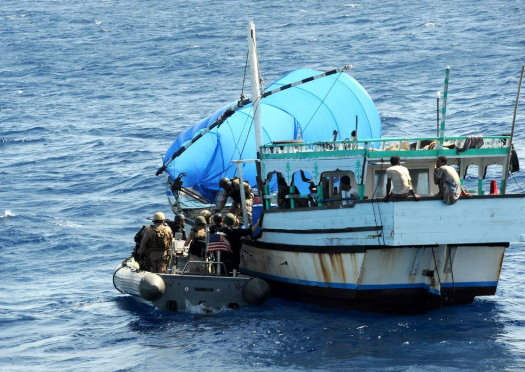
Somali pirates typically operated using small, fast skiffs launched from larger “mother ships,” often captured fishing vessels. They would target slow-moving merchant ships, using ladders and grappling hooks to board. Once a vessel was seized, the crew would be held for ransom, often for months, in exchange for millions of dollars. The peak of Somali piracy saw hundreds of attacks annually, disrupting major shipping lanes and costing the global economy billions.
The international community responded with unprecedented naval deployments, including NATO’s Operation Ocean Shield, the EU’s Operation Atalanta, and various national missions. These efforts focused on patrolling high-risk areas, escorting vulnerable vessels, and conducting anti-piracy operations. The adoption of Best Management Practices (BMP) by the shipping industry, such as increased vessel speed, evasive maneuvers, and the use of armed security guards, also played a crucial role in deterring attacks. By the mid-2010s, these combined efforts had drastically reduced successful pirate attacks.
Long-term Solutions and Regional Stability
While naval patrols and armed guards proved effective in the short term, sustainable solutions require addressing the root causes on land. This involves supporting the rebuilding of state institutions in Somalia, fostering economic development, creating alternative livelihoods, and strengthening local law enforcement and judicial systems. Efforts to combat illegal, unreported, and unregulated (IUU) fishing are also vital to restore marine ecosystems and legitimate fishing opportunities for local communities.
Regional cooperation, capacity building for local navies and coast guards, and sustained international support for governance and development initiatives are essential to prevent a resurgence of piracy. The long-term success hinges on creating a stable, prosperous Somalia where its citizens have legitimate opportunities and a functional government capable of enforcing the rule of law and protecting its maritime domain.

Deep-Sea Mining: The New Frontier for Critical Minerals
As terrestrial mineral resources become scarcer and demand for critical metals for green technologies (like electric vehicles and renewable energy) skyrockets, the deep seabed is emerging as a new and potentially lucrative frontier for resource extraction. This prospect, however, is fraught with significant environmental risks and complex legal and geopolitical challenges, positioning deep-sea mining as a new battleground for future resource competition and environmental advocacy.
The Lure of Polymetallic Nodules and Rare Earths
The deep ocean floor, particularly in areas like the Clarion-Clipperton Zone (CCZ) in the Pacific, contains vast deposits of polymetallic nodules, which are potato-sized rocks rich in manganese, nickel, copper, cobalt, and rare earth elements. These minerals are vital components in modern electronics, batteries, and high-tech industries. Hydrothermal vents, found along mid-ocean ridges, also host deposits of polymetallic sulphides, containing copper, zinc, gold, and silver. Additionally, cobalt-rich ferromanganese crusts on seamounts offer another potential source of critical metals.
The perceived abundance and high concentration of these minerals make deep-sea mining an attractive proposition for nations and corporations seeking to secure future supply chains and reduce reliance on politically unstable or monopolized terrestrial sources. Companies are investing heavily in developing the specialized robotic technology required to operate in the extreme pressures and darkness of the deep ocean, often miles below the surface.
Technological Challenges and Economic Viability
Deep-sea mining involves significant technological hurdles. Specialized vehicles and remote-controlled robots are needed to collect nodules or drill into hydrothermal vents, transport the material to the surface, and then process it. Operating in the crushing pressures and freezing temperatures of the deep sea requires incredibly robust and reliable machinery. The sheer scale of operations needed to make such ventures economically viable is also immense, requiring substantial upfront investment and long-term commitment.
The economic viability is also subject to fluctuating global commodity prices, the cost of developing and deploying advanced technology, and the evolving regulatory framework. While the potential rewards are high, the risks, both financial and environmental, are equally substantial. The industry is still in its nascent stages, with most activity focused on exploration and technology testing rather than full-scale commercial extraction.
Environmental Concerns and Regulatory Frameworks
The deep sea is home to unique and often poorly understood ecosystems, characterized by slow growth rates and extreme adaptation. Scientists warn that deep-sea mining could cause irreversible damage, including:
- Habitat Destruction: The physical act of mining can pulverize vast areas of the seabed, destroying habitats and crushing organisms.
- Sediment Plumes: Mining operations generate large plumes of sediment that can spread for miles, smothering marine life, altering water chemistry, and affecting filter feeders.
- Noise Pollution: The constant noise from machinery can disrupt sensitive deep-sea fauna, many of which rely on sound for navigation and communication.
- Biodiversity Loss: Many deep-sea species are endemic to specific sites; their destruction could lead to extinctions before they are even discovered.
The International Seabed Authority (ISA), established under the United Nations Convention on the Law of the Sea (UNCLOS), is responsible for regulating mineral-related activities in the international seabed area (the “Area”). The ISA is currently developing a comprehensive mining code to govern future operations, balancing the interests of resource development with environmental protection. However, concerns remain about the adequacy of these regulations and the capacity for effective oversight, especially given the limited scientific understanding of deep-sea ecosystems.

Towards Integrated Ocean Governance and Sustainable Futures
The challenges of Arctic resource management, maritime security, and deep-sea mining underscore a fundamental truth: the oceans are a shared global commons, requiring integrated governance and collaborative approaches to ensure their long-term health and sustainability. Addressing these complex issues demands a holistic perspective that transcends national boundaries and balances economic imperatives with ecological preservation and social equity.
International Law and Collaborative Frameworks
The United Nations Convention on the Law of the Sea (UNCLOS) serves as the foundational legal framework for all ocean activities, defining the rights and responsibilities of nations in their use of the world’s oceans. However, UNCLOS, ratified in 1982, predates many of the current challenges, such as the full extent of climate change impacts on the Arctic or the advanced technological capabilities for deep-sea mining. This necessitates continuous adaptation and the development of supplementary agreements, such as the recent High Seas Treaty (formally known as the BBNJ Agreement), aimed at protecting biodiversity in areas beyond national jurisdiction.
Beyond legal frameworks, international bodies like the International Maritime Organization (IMO) for shipping, regional fisheries management organizations (RFMOs), and scientific bodies like the Intergovernmental Oceanographic Commission (IOC) play crucial roles in setting standards, coordinating research, and fostering cooperation. The effectiveness of these frameworks, however, often depends on the political will and commitment of member states to adhere to and enforce common rules.
Balancing Economic Development with Conservation
A key aspect of sustainable ocean governance is finding the right balance between exploiting marine resources for economic benefit and ensuring the conservation of marine ecosystems. This involves implementing ecosystem-based management approaches that consider the interconnectedness of marine life and habitats, rather than managing single species or sectors in isolation. For instance, in the Arctic, this means rigorous environmental impact assessments for oil and gas projects and establishing marine protected areas (MPAs) in ecologically significant zones.
For deep-sea mining, the precautionary principle is paramount, advocating for a pause or moratorium until sufficient scientific understanding and robust regulatory mechanisms are in place to prevent irreversible harm. In areas affected by piracy, economic development initiatives that create sustainable livelihoods, such as investment in fisheries management and aquaculture, can reduce the incentive for illicit activities, demonstrating how economic and environmental goals can be mutually reinforcing.
The Role of Technology and Innovation
Technology plays a dual role in shaping the future of our oceans. While it enables deeper resource extraction and increased maritime traffic, it also offers powerful tools for monitoring, conservation, and sustainable management. Satellite imagery, autonomous underwater vehicles (AUVs), and advanced sensor networks can provide real-time data on ocean health, illegal fishing, and vessel movements. Innovative solutions for renewable energy, such as offshore wind and wave power, can reduce reliance on fossil fuels, thereby mitigating climate change impacts on oceans.
Furthermore, scientific research, enhanced by technological advancements, is critical for filling knowledge gaps about deep-sea ecosystems, Arctic climate dynamics, and the effectiveness of conservation strategies. Investing in ocean science and fostering international collaboration in research are essential for informed decision-making and developing truly sustainable practices for the future of our global oceans.
Frequently Asked Questions (FAQ)
- Q1: What are the primary geopolitical concerns in the Arctic Ocean?
- The primary geopolitical concerns in the Arctic revolve around sovereignty claims over newly accessible territories and resources, the control of strategic shipping lanes like the Northern Sea Route, and the increased military presence of bordering nations. The potential for vast untapped oil, gas, and mineral reserves fuels competition, while climate change-induced ice melt exacerbates these tensions by opening up new areas for access and exploitation.
- Q2: How did illegal fishing contribute to the rise of Somali piracy?
- Illegal, unreported, and unregulated (IUU) fishing by foreign trawlers played a significant role by depleting local fish stocks, which were the primary livelihood for many Somali coastal communities. With their traditional means of sustenance destroyed and no functional government to protect their waters, many desperate fishermen turned to piracy, initially seeing it as a form of self-defense against foreign exploitation before it evolved into organized criminal activity focused on ransom.
- Q3: What are polymetallic nodules and why are they important for deep-sea mining?
- Polymetallic nodules are small, potato-sized rock concretions found on the deep ocean floor, particularly abundant in areas like the Clarion-Clipperton Zone. They are rich in critical metals such as manganese, nickel, copper, cobalt, and rare earth elements, which are essential for modern technologies like electric vehicle batteries, renewable energy systems, and consumer electronics. Their high concentration and growing demand make them a prime target for deep-sea mining, despite significant environmental concerns.
- Q4: What is the role of the International Seabed Authority (ISA) in deep-sea mining?
- The International Seabed Authority (ISA) is an intergovernmental body established under the United Nations Convention on the Law of the Sea (UNCLOS). Its primary role is to organize and control mineral-related activities in the international seabed area (the “Area”) for the benefit of humankind as a whole. This includes regulating exploration, developing a comprehensive mining code, and ensuring the effective protection of the marine environment from harmful effects of deep-seabed activities. The ISA aims to balance resource exploitation with environmental stewardship.
- Q5: How can global ocean governance be improved to address these complex challenges?
- Improving global ocean governance requires a multi-faceted approach. This includes strengthening the implementation and enforcement of existing international laws like UNCLOS and new agreements like the High Seas Treaty, fostering greater international cooperation through bodies like the Arctic Council and IMO, and adopting ecosystem-based management principles. It also necessitates significant investment in ocean science to better understand marine environments, developing sustainable economic alternatives for coastal communities, and ensuring the active participation of indigenous peoples and local stakeholders in decision-making processes.
The Dynamics of Ocean Science: From Deep-Sea Volcanoes to Global Climate Regulation
The Ocean’s Unseen Worlds: Exploring Stratification, Deep-Sea Mysteries, and Migratory Giants

Related Posts
The Dynamics of Ocean Science: From Deep-Sea Volcanoes to Global ...
April 17, 2026
The Silent Crisis: Unveiling the Threats to Our Oceans
April 17, 2026