Educational note: This site publishes independent educational content for general readers. Articles about ecology, wildlife, conservation, pollution, animal behavior, or environmental risk are informational only and should not be treated as scientific, legal, regulatory, veterinary, medical, emergency, or professional advice. Consult qualified experts, peer-reviewed sources, and official local guidance before making decisions.
The natural world is a testament to the power of evolution, a grand theater where survival is the ultimate prize. Across every ecosystem, from frigid rivers to dense rainforest canopies, animals have developed an astonishing array of adaptations to thrive. These are not mere quirks of nature; they are finely tuned biological masterpieces, perfected over millennia. This guide delves into the remarkable strategies of several species, showcasing the intricate relationship between an animal’s environment, its physical form, and its behavior. We will explore how river otters conquer the cold, how bears master the seasons, how gibbons dance through the trees, how flamingos paint themselves with their diet, and how octopuses exhibit an intelligence that rivals the so-called “higher” animals.
Understanding these adaptations offers more than just a glimpse into the lives of fascinating creatures. It reveals the fundamental principles of natural selection and ecological balance. Each example serves as a case study in problem-solving on an evolutionary scale, demonstrating how life finds a way to persist and flourish against all odds. Join us as we uncover the science behind these living portraits of evolutionary success.
Aquatic Mastery: The River Otter’s Thermal Armor
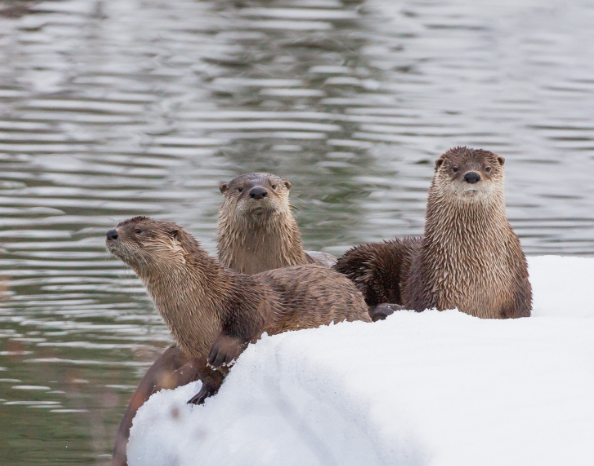
The American River Otter (Lontra canadensis) is a marvel of semi-aquatic engineering, perfectly equipped to navigate and hunt in cold water environments. Its survival hinges on a sophisticated insulation system that goes far beyond a simple coat of fur. This adaptation is a multi-layered defense against hypothermia, allowing the otter to remain active even in near-freezing temperatures for extended periods.
The Science of a Two-Layered Coat
The primary defense is the otter’s dense, dual-layer fur. This is not a uniform coat but a highly specialized structure composed of two distinct types of hair working in concert.
- Guard Hairs: The outer layer consists of long, coarse guard hairs. These are the visible part of the coat. Their main function is to form a protective, waterproof barrier. They shed water efficiently and protect the delicate underfur from abrasion and damage.
- Underfur: Beneath the guard hairs lies a thick, dense layer of underfur. This fur is incredibly fine and crimped, which allows it to trap a substantial layer of air against the otter’s skin. This trapped air is the key to its insulation; it acts like a diver’s dry suit, preventing the cold water from ever reaching the skin and drastically reducing heat loss. The density is remarkable, with some counts reaching over 350,000 hairs per square inch in certain areas.
Natural Waterproofing: The Role of Sebaceous Glands
Fur alone is not enough. The otter’s skin is equipped with specialized sebaceous glands that secrete a waxy, oily substance called sebum. The otter meticulously grooms itself, spreading this natural oil throughout its coat. This process serves a critical purpose: it makes the guard hairs water-repellent. Water beads up and rolls off, ensuring the insulating layer of underfur remains almost completely dry, even during prolonged dives. Without this constant grooming and oiling, the fur would become waterlogged, its insulating properties would vanish, and the otter would quickly succumb to the cold.
Body Shape and Behavior for Cold Water Survival
Beyond its fur, the river otter’s entire physiology is built for aquatic life. Its long, streamlined body, powerful tail, and webbed feet make it an efficient and agile swimmer, minimizing energy expenditure in the water. This efficiency is crucial for conserving body heat. Behaviorally, otters are known for their energetic and playful sliding on mud and snow, an activity that, in addition to being social, helps maintain the condition of their fur by matting it down and aligning the hairs for optimal performance.

Forest Giants: The Bear’s Strategy for Survival
Bears are iconic symbols of the wilderness, embodying raw power and a profound connection to the cycles of nature. Their survival, particularly in temperate and northern climates, depends on a complex suite of adaptations revolving around seasonal changes, food availability, and energy conservation. Their strategies for enduring lean winter months are a masterclass in physiological adaptation.
The Misconception of Hibernation: Torpor Explained
While commonly said to “hibernate,” most bear species, like the American black bear and grizzly bear, enter a state of metabolic suppression known as torpor. Unlike true hibernation seen in smaller mammals, where body temperature drops to near freezing and arousal is slow, a bear’s torpor is less extreme but equally remarkable.
- Metabolic Slowdown: During winter torpor, a bear’s heart rate can drop from around 50 beats per minute to as low as 8-10. Its breathing becomes shallow, and its metabolic rate plummets, allowing it to conserve vast amounts of energy.
- Stable Body Temperature: Crucially, a bear’s body temperature only drops by about 10-12°F. This allows the bear to reawaken relatively quickly if threatened, a vital defense mechanism for a large animal.
- No Eating, Drinking, or Waste: For months, a bear in its den will not eat, drink, urinate, or defecate. It survives entirely on the fat reserves it built up during the hyperphagia (excessive eating) of late summer and autumn. A unique physiological process allows them to recycle urea, a waste product, into protein, preventing muscle atrophy.
An Omnivore’s Toolkit: Dietary Adaptability
Bears are the ultimate omnivores, and this dietary flexibility is a key adaptation. Their diet shifts dramatically with the seasons, allowing them to exploit whichever food source is most abundant. In the spring, they might focus on new grasses and animal carcasses from winter. In the summer, they turn to berries, insects, and fish, like the famous salmon runs. In the fall, they consume high-fat foods like nuts and acorns to build the critical fat layers needed for torpor. This ability to eat almost anything is what allows them to thrive in such a wide range of habitats.
Social Dynamics and Maternal Care
Bears are typically solitary animals, which reduces competition for resources. However, their maternal care is an essential behavioral adaptation. Mother bears invest an immense amount of energy in their cubs, who may stay with them for up to two or three years. During this time, the mother teaches them vital survival skills: what to eat, where to find it, how to hunt, and how to avoid danger. This extended learning period is crucial for the success of the next generation.

Canopy Dancers: The Gibbons’ Aerial Artistry
In the dense rainforests of Southeast Asia, the canopy is a world of its own, and the gibbon is its undisputed master of locomotion. These small apes are renowned for their breathtaking method of movement, known as brachiation. This form of arboreal travel is not just a behavior but the result of a suite of highly specialized anatomical features, making them the fastest and most agile of all tree-dwelling, non-flying mammals.
Anatomical Marvels for Brachiation
Brachiation involves swinging from branch to branch using only the arms. To perform this feat, gibbons have evolved a unique body plan that sets them apart from other primates.
- Extremely Long Arms: A gibbon’s arms are disproportionately long compared to its legs, significantly increasing its reach and the momentum of its swing.
- Hook-like Hands: Their hands have long, curved fingers and a much-reduced thumb, forming a perfect hook to securely grip branches without wasting energy.
- Ball-and-Socket Wrist Joint: Unlike humans, gibbons possess a true ball-and-socket joint in their wrist, allowing for a much greater range of motion and flexibility when swinging.
- Powerful Shoulders and Torso: Their shoulder joints are highly mobile, and their torso is short and compact, enabling them to pivot and change direction with incredible speed and grace.
The Language of Song: Communication and Bonding
Gibbons are as famous for their voices as they are for their acrobatics. They produce loud, elaborate, and melodious calls, often referred to as “songs.” These vocalizations are a critical behavioral adaptation for life in a dense forest where visibility is limited. The songs serve multiple purposes: they are used to defend territory from rival groups, attract mates, and reinforce the strong pair bond that is characteristic of gibbon society. Each species has a unique song, and the duets performed by a mated pair are complex and coordinated, strengthening their social connection.
Complex Social Lives in the Treetops
Most gibbon species are socially monogamous, forming long-term pair bonds that can last a lifetime. A typical family group consists of a mated pair and their dependent offspring. This social structure is relatively rare among primates and is linked to their arboreal lifestyle and territorial nature. The strong bond between the male and female is essential for cooperatively defending a territory rich in fruit and raising their young, who have a long period of dependency as they learn the complex skills of brachiation and foraging.

The Vibrant Hue: Unraveling the Flamingo’s Pink Secret
The flamingo’s iconic pink, orange, or reddish plumage is one of the most striking examples of diet-induced coloration in the animal kingdom. These birds are not born pink; a flamingo chick is born with dull grey feathers. Its vibrant adult coloration is a direct result of the pigments in the food it consumes, a fascinating physiological adaptation that also serves as an important social signal.
The Carotenoid Connection: You Are What You Eat
The secret behind the flamingo’s color lies in a group of natural pigments called carotenoids. These organic pigments are produced by plants and algae and are found in abundance in the brine shrimp, blue-green algae, crustaceans, and mollusks that make up the flamingo’s diet. The specific carotenoids responsible are primarily canthaxanthin and astaxanthin. When a flamingo feeds in its specialized aquatic habitat, it ingests these pigments along with its food.
From Diet to Plumage: The Metabolic Pathway
Ingesting the pigments is only the first step. The flamingo’s digestive system is adapted to extract and break down these carotenoids. Enzymes in the liver process the pigments, which are then absorbed into the bloodstream and transported to the feather follicles. As new feathers grow, the carotenoid molecules are deposited into the keratin structure, imparting their brilliant color. The intensity of a flamingo’s coloration is a direct indicator of its health, foraging success, and the richness of its feeding grounds. A pale or white flamingo is often a sign of being unhealthy or malnourished.
Color as a Signal in Flamingo Society
The flamingo’s color is far more than just decoration; it is a critical component of its social and reproductive behavior. The most brightly colored individuals are often the most desirable mates. A vibrant hue signals to potential partners that the bird is healthy, a skilled forager, and likely to be a successful parent. During collective courtship displays, where large flocks of flamingos march and perform synchronized movements, the intensity of their color plays a significant role in mate selection. This turns their diet-dependent coloration into an honest signal of fitness, a key driver in their evolutionary success.

Oceanic Intellect: The Octopus as a Marine Primate
Often called the “primates of the sea,” octopuses possess an intelligence so profound and alien that it challenges our very understanding of cognition. As invertebrates, their evolutionary path diverged from ours over 600 million years ago, yet they have convergently evolved sophisticated problem-solving skills, memory, and even personalities. This cognitive prowess is their ultimate adaptation for survival as soft-bodied animals in a world of shelled and sharp-toothed predators.
A Distributed Nervous System: Thinking with Eight Arms
The source of an octopus’s intelligence is its unique nervous system. It has a large central brain, but a remarkable two-thirds of its approximately 500 million neurons are located within its eight arms. This creates a distributed intelligence network. Each arm can act semi-autonomously, capable of tasting, touching, and moving on its own accord. This allows the octopus to multitask on an incredible level, such as exploring a cave with one arm, holding onto a rock with another, and cracking open a shellfish with a third, all simultaneously. The central brain acts as an executive controller, directing the overall strategy.
Master of Disguise: Adaptive Camouflage
The octopus’s skin is a biological marvel, a high-resolution display capable of changing color, pattern, and even texture in milliseconds. This is achieved through a multi-layered system of specialized cells:
- Chromatophores: Tiny sacs of pigment that can be expanded or contracted by muscles, instantly changing the skin’s color.
- Iridophores: Reflect light, creating iridescent and metallic sheens.
- Leucophores: Reflect ambient light, allowing the octopus to match the brightness of its surroundings, particularly useful for white or pale backgrounds.
By controlling these cells with its advanced brain, an octopus can perfectly mimic the appearance of sand, rocks, or seaweed, becoming virtually invisible to both prey and predators. This is a cognitive adaptation, as it requires the octopus to observe and interpret its environment to create the appropriate disguise.
Evidence of Problem-Solving and Tool Use
Octopuses have repeatedly demonstrated astonishing problem-solving abilities in both laboratory settings and the wild. They can learn to navigate mazes, solve puzzles, and even open screw-top jars to get food. There is also strong evidence of tool use. The veined octopus, for example, has been observed collecting discarded coconut shells, carrying them around, and assembling them as a portable shelter when needed. This act of foresight—carrying an object for future use—is considered a hallmark of advanced intelligence.
Frequently Asked Questions (FAQ)
- Q1: What is the primary difference between a physical and a behavioral adaptation?
- A physical adaptation is a structural characteristic of an animal’s body that helps it survive in its environment. Examples include the river otter’s dense fur or the gibbon’s long arms. A behavioral adaptation is something an animal does—an action or pattern of actions—that helps it survive. Examples include the bear’s winter torpor, gibbon songs for communication, or an octopus using tools.
- Q2: Why aren’t flamingos born pink?
- Flamingos are not genetically programmed to be pink. Their color comes entirely from the carotenoid pigments in the food they eat, such as algae and brine shrimp. A chick is born with grey feathers and only develops its pink coloration as it matures and consumes a diet rich in these specific pigments. This makes their color an honest signal of their foraging ability and health.
- Q3: How can an octopus’s arms “think” for themselves?
- An octopus has a distributed nervous system. While it has a central brain in its head, the majority of its neurons are located within its eight arms. Each arm contains a complex nerve cord that acts as a local control center, allowing it to manage fine motor movements and process sensory information (like touch and taste) independently. The central brain provides high-level commands, but the arms execute the details, enabling incredible multitasking.
- Q4: Is a bear’s winter torpor the same as true hibernation?
- No, it is physiologically different. In true hibernation (seen in animals like groundhogs), body temperature drops to near freezing, and the animal is very slow to arouse. In a bear’s torpor, the body temperature only drops by about 10-12°F, and their metabolic slowdown is less extreme. This allows a bear to wake up much more quickly to defend itself or its cubs from danger, a crucial advantage for a large animal.
- Q5: How do adaptations drive evolution?
- Adaptations are the core engine of evolution by natural selection. Within a population, individuals have slight variations. If a variation (e.g., slightly denser fur, a slightly longer arm) gives an individual a survival or reproductive advantage in its specific environment, that individual is more likely to live longer and have more offspring. Over many generations, this advantageous trait becomes more common in the population, leading to the evolution of a well-suited adaptation.