Educational note: This site publishes independent educational content for general readers. Articles about ecology, wildlife, conservation, pollution, animal behavior, or environmental risk are informational only and should not be treated as scientific, legal, regulatory, veterinary, medical, emergency, or professional advice. Consult qualified experts, peer-reviewed sources, and official local guidance before making decisions.
The Physiology of an Apex Aerial Predator
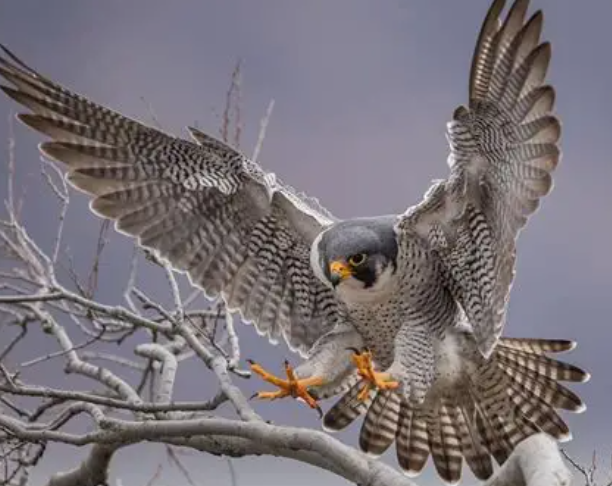
The falcon is not merely a bird; it is a biological masterpiece of evolution, specifically engineered for high-velocity interception. Their skeletal structure is lightweight yet incredibly rigid, designed to withstand the immense G-forces encountered during a high-speed stoop (dive).
Visual Acuity and Tracking Systems
A falcon’s vision is arguably the most sophisticated sensory system in the animal kingdom. They possess a fovea—the part of the eye responsible for sharp central vision—that is significantly more dense than that of a human. This allows them to spot movement from several miles away, enabling them to initiate their patrol with surgical precision.

Advanced Hunting Tactics and The Stoop
The “patrol” phase of a falcon’s day is a calculated expenditure of energy. Falcons utilize thermal updrafts to gain altitude, minimizing the need for active wing beats. Once a target is identified, the transition from patrol to attack is near-instantaneous.
The Mechanics of the Stoop
The stoop is the falcon’s signature move. By tucking their wings tightly against their body, they become a living teardrop, reducing drag to a minimum. During this maneuver, speeds can exceed 200 mph.
| Phase | Description | Energy Cost |
|---|---|---|
| Thermal Soaring | Gaining height via warm air | Low |
| Active Patrol | Scanning for prey movement | Moderate |
| The Stoop | High-velocity vertical strike | High |

Operational Challenges and Survival Strategies
Even for an apex predator, the daily patrol is fraught with risks. Environmental variables such as wind shear, atmospheric pressure, and prey evasion tactics play a significant role in the success rate of a hunt.
Pro Tips for Observing Falcon Behavior
- Carry high-magnification binoculars (10×42) to track distant flight paths.
- Look for “plucking posts”—areas where falcons gather to consume prey.
- Observe during dawn or dusk, as these are the peak activity times for avian movement.
Frequently Asked Questions (FAQ)
- How fast can a falcon travel during a dive?
- The Peregrine Falcon, the fastest member of the species, can reach speeds exceeding 200 mph (320 km/h) during its signature hunting stoop.
- How do falcons breathe while flying at such high speeds?
- Falcons have small bony tubercles in their nostrils that guide airflow, preventing the high-velocity wind from damaging their lungs or making it difficult to breathe.
- What distinguishes a falcon from a hawk?
- Falcons typically have longer, pointed wings and a “tomial tooth” on their beaks, which is a specialized notch used to deliver a quick, lethal bite to prey.
- Do falcons hunt alone or in groups?
- Falcons are solitary hunters. Their patrol and hunting strategies rely on individual stealth, speed, and visual acuity rather than pack coordination.