The Physics of the Stoop: Nature’s Ultimate Dive
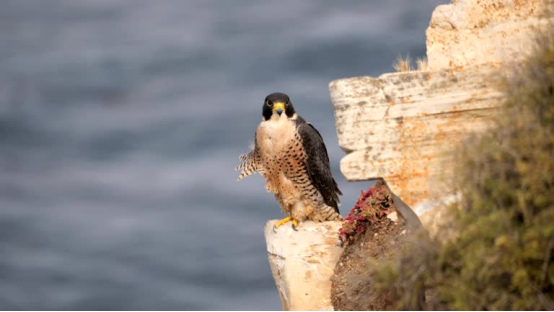
The Peregrine Falcon is not merely a bird; it is a biological masterpiece of aeronautical engineering. The “stoop”—the high-speed hunting dive—is the pinnacle of its predatory behavior. During this maneuver, the falcon tucks its wings tightly against its body to minimize drag, transforming itself into a living teardrop shape capable of piercing the air with minimal resistance.
Aerodynamic Adaptations
To achieve speeds exceeding 200 miles per hour, the falcon utilizes specialized feathers that are stiff and pointed. These feathers reduce turbulence, allowing the bird to maintain stability while plummeting from heights of over 1,000 meters. The sheer force of this impact is mitigated by a unique skeletal structure and specialized breathing mechanisms.

Evolutionary Biology and Specialized Anatomy
Survival in the wild requires more than just speed; it requires the ability to process oxygen and navigate at high velocity. The Peregrine Falcon has evolved specific features that prevent it from blacking out or suffering from the extreme G-forces encountered during its descent.
The Nictitating Membrane
One of the most vital components of the falcon’s anatomy is its nictitating membrane—a third eyelid that acts as a protective shield. This membrane clears debris and keeps the eye moist during high-speed flight, ensuring that the falcon never loses sight of its prey during the final, critical seconds of the hunt.
Respiratory Efficiency
At 200 mph, the air pressure is intense enough to potentially damage the lungs of most animals. Peregrine Falcons possess small bony tubercles inside their nostrils that act as baffles, slowing down the incoming air and allowing the bird to breathe comfortably even while traveling at terminal velocity.

Hunting Strategy and Prey Selection
Peregrine Falcons are primarily bird-hunters, targeting species ranging from small songbirds to larger ducks. Their strategy relies on superior altitude; by holding the “high ground,” they gain potential energy that is converted into kinetic energy during the stoop.
| Feature | Impact on Hunting |
|---|---|
| High Altitude | Allows for gravity-assisted acceleration. |
| Tucked Wings | Reduces surface area to achieve maximum velocity. |
| Talons | Used as a blunt projectile to stun prey mid-air. |
| Vision | Provides long-range tracking of fast-moving targets. |

Frequently Asked Questions (FAQ)
- How fast can a Peregrine Falcon actually fly?
- While their level flight speed is around 40-60 mph, their record-breaking speed comes from the “stoop” (dive), where they have been clocked at speeds exceeding 240 mph.
- Does the falcon kill its prey on impact?
- Yes, in many cases. The falcon uses its hind talons to strike the prey with enough force to kill or stun it instantly upon contact, after which the falcon catches the falling prey in mid-air.
- Why don’t their eyes get damaged at high speeds?
- They possess a nictitating membrane, a transparent third eyelid that protects the eye from wind and debris while maintaining clear vision.
- Where are Peregrine Falcons found?
- They are one of the most widespread bird species, found on every continent except Antarctica. They are highly adaptable and thrive in both coastal cliffs and urban skyscrapers.