Educational note: This site publishes independent educational content for general readers. Articles about ecology, wildlife, conservation, pollution, animal behavior, or environmental risk are informational only and should not be treated as scientific, legal, regulatory, veterinary, medical, emergency, or professional advice. Consult qualified experts, peer-reviewed sources, and official local guidance before making decisions.
The Evolutionary Marvel of the Hippopotamus
The Hippopotamus amphibius is far more than just a large, river-dwelling herbivore. Evolutionarily, these creatures are the closest living relatives to cetaceans—whales and dolphins—a fact that explains their unique semi-aquatic lifestyle. Their bodies have adapted over millions of years to thrive in both water and on land, balancing the need for thermoregulation with the requirements of a massive frame.
Physical Adaptations for an Amphibious Life
The hippo’s skin is perhaps its most fascinating feature. Lacking traditional sweat glands, they secrete a red, oily substance often called “blood sweat,” though it contains neither blood nor sweat. This substance acts as a natural sunscreen and antibiotic, protecting their sensitive skin from the harsh African sun and preventing infection in murky waters.

Social Dynamics and Pod Hierarchy
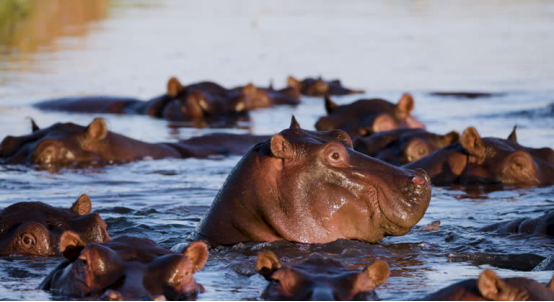
Hippos are intensely social animals, living in groups known as pods that can number from ten to over a hundred individuals. These pods are structured around a dominant bull who controls a specific stretch of the riverbank. Understanding their social hierarchy is essential to grasping their territorial nature.
The Role of the Dominant Bull
The dominant male spends much of his time asserting his presence. Through “dung showering”—a behavior where the hippo spins its tail while defecating—they mark their territory and communicate their status to rivals. This is not merely aggressive behavior; it is a vital part of the pod’s internal communication system.
| Social Aspect | Behavioral Detail |
|---|---|
| Pod Size | Typically 10-30, up to 100+ |
| Territoriality | Strictly guarded river sections |
| Communication | Vocalizations, posturing, dung-showering |
| Aggression | High during breeding and territorial disputes |

The Ecological Impact of Hippos
Often referred to as “ecosystem engineers,” hippos play a critical role in nutrient cycling. By grazing on land at night and returning to the water during the day, they transport massive amounts of organic matter into aquatic environments. This process provides a consistent food source for fish and other aquatic organisms.
Common Pitfalls in Human-Hippo Encounters
Many tourists and locals underestimate the speed and agility of the hippo. Despite their weight, they can outrun a human on land. Never place yourself between a hippo and the water, as this is their primary escape route and they will charge if they feel their path is blocked.

Frequently Asked Questions (FAQ)
- Are hippos strictly nocturnal?
- While they are primarily nocturnal grazers, they spend the majority of their daylight hours in the water to keep their bodies cool and avoid skin dehydration.
- How fast can a hippopotamus run?
- On land, a hippo can reach speeds of up to 30 kilometers per hour (19 mph) over short distances, making them extremely dangerous if provoked.
- Why do hippos open their mouths so wide?
- Opening the mouth wide is a display of aggression and a warning to rivals. It showcases their massive canine teeth, which can reach up to 50 centimeters in length.
- Do hippos swim?
- Surprisingly, hippos cannot swim. Their bodies are too dense. Instead, they move by pushing off the river floor or walking along the bottom, surfacing periodically to breathe.