Educational note: This site publishes independent educational content for general readers. Articles about ecology, wildlife, conservation, pollution, animal behavior, or environmental risk are informational only and should not be treated as scientific, legal, regulatory, veterinary, medical, emergency, or professional advice. Consult qualified experts, peer-reviewed sources, and official local guidance before making decisions.
Accidents and the Fragile Lives of Whales
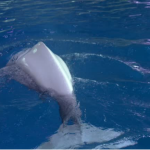
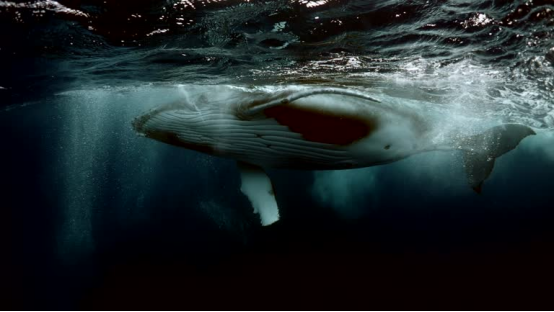
Whales are undeniably majestic creatures of the vast ocean, but even their immense size makes them vulnerable to the threats posed by human industrial activity. A single accidental ship collision can be enough to claim a whale’s life. A sharp propeller slashes the whale’s back, and the backwash of seawater carries it into the wound, dangerously mixing rust and blood. This puts the whale on the brink of death. The whale’s massive body can no longer sustain normal movement, its tail fin loses strength, and its entire physiological system begins to collapse.
Such accidents are not uncommon. According to the International Ocean Conservancy, hundreds of whales die each year from ship collisions, entanglement in fishing nets, or underwater explosions. This not only has a direct impact on whale populations but also has profound consequences for the entire marine ecosystem. As whales are crucial apex creatures in the marine food chain, their deaths can trigger complex ecological chain reactions.
The role of sharks and other scavengers
When a whale dies, its massive body quickly becomes a vital resource in the marine food chain. The first to arrive are usually sharks, which efficiently tear at the whale’s skin and muscles, providing energy for themselves and subsequent scavengers. Scientific research shows that the blubber of an adult whale can be over half a meter thick, meaning its stored energy is enough to support the winter energy needs of thousands of small seabirds and marine life.
Not only sharks, but also shrimp and other small crustaceans gather around whale carcasses. As the whale carcass sinks to the depths, its fat begins to break down, allowing plankton and microorganisms to flourish, nourishing the marine ecosystem. This process, known to ecologists as a “whale fall,” is a crucial link in the marine food web.
Symphony of life in the deep sea
When whale carcasses sink to depths exceeding 1,000 meters, sunlight cuts off, and the biological environment undergoes a dramatic transformation. Deep-sea creatures often have degenerate eyes, making them extremely insensitive to light. However, they can sense their environment through water vibrations and chemical cues. Whale carcasses serve as a nutrient source for these creatures, supporting a unique deep-sea ecosystem.
Whale falls provide not only food for large predators but also habitat for smaller bottom-dwelling organisms. The surface of the bones may become a new home for crabs, starfish, and shellfish, while the whale’s decomposed fat and muscle nourish a microbial community. Over the next five years, these small organisms will establish an entire ecosystem on the whale bones. After a decade, the bones will finally break down into minerals that will be incorporated into the seawater, providing nutrients for marine life for decades to come.
Short life, long-term impact
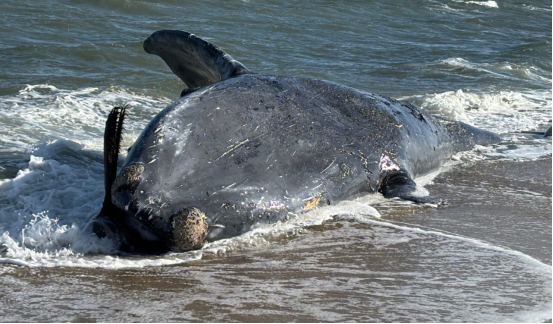
While the death of a whale marks the end of its individual life, its ecological value is far from lost. The fat, minerals, and trace elements stored in its body are converted into energy for other life forms, potentially giving rise to over 200 new species. This process allows the whale to continue living in another form even after death, participating in the cycle of the marine ecosystem and maintaining a balanced marine food web.
The accumulation of microplastics and heavy metals after whale deaths also spreads through the food chain. This is the hidden impact of modern industrial activities on marine ecosystems. These pollutants may remain in the fish and shrimp caught by humans, and these trace elements originally originated from marine pollutants accumulated in whales. This cycle reminds us that every link in the marine ecosystem is closely related to human life. The death of a whale is not only an ecological event, but also an environmental warning.
Whale Falls from an Ecological Perspective
Whale falls provide a unique window into deep-sea research. By observing whale falls, scientists can understand the structure of deep-sea food chains, the interactions between species, and the adaptation mechanisms of deep-sea ecosystems to external disturbances. The whale fall process consists of several stages: first, large scavengers rapidly consume soft tissues; second, medium-sized organisms decompose residual tissues; and finally, microorganisms and bacteria release minerals from the bones into the environment. Each stage reflects the laws of energy flow and material circulation in nature.
Whale falls not only support biodiversity but also potentially influence local carbon cycles. The vast amounts of carbon stored in whales are locked away for extended periods after sinking to the deep ocean, slowing their return to the atmosphere. This is also crucial for addressing global climate change.
Philosophical Thinking on the Cycle of Life and Death
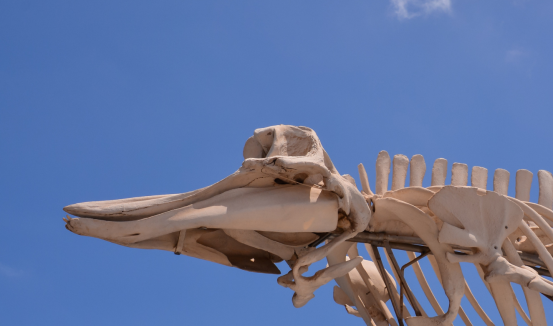
From an individual perspective, the death of a whale may seem tragic, but from the perspective of ecosystems and material cycles, its demise is profoundly meaningful. A whale’s body provides energy for countless marine organisms, a habitat for deep-sea creatures, and even influences food chains and chemical cycles at a microscopic level. The end of life does not mean complete extinction, but rather a transformation into another form, a continuation in nature.
This natural cycle also sparks philosophical reflection: life and death aren’t defined by absolute boundaries, but rather by the continuous flow of energy and matter. Every living being, after death, participates in the continuation of the ecosystem in various forms, and whales are merely the most magnificent manifestation of this in the ocean.
Human Activities and Ecological Responsibility
The whale deaths also expose the impact humans have on marine ecosystems. Ship collisions, entanglement in fishing nets, and the accumulation of pollutants all pose direct and indirect threats. Protecting whales and their habitats is not only a conservation responsibility but also a necessary measure to maintain ocean health and food security.
Modern marine conservation advocates for the establishment of speed reduction zones, fishing net warning systems, and pollutant discharge controls to reduce casualties among whales and other marine life. Every conservation action has the potential to reduce the tragedy of future whale falls while maintaining the integrity of marine ecosystems.
Summary and Inspiration
The death of a whale is not just the end of an individual life; it marks a crucial milestone in the ecological cycle. Through whale falls, scientists can observe the structure and functioning of deep-sea ecosystems, while the public can understand the importance of marine conservation. Upon death, a whale’s body transforms into energy for other life forms, sustaining biodiversity and the natural cycle. It also serves as a reminder to humanity that while we enjoy marine resources, we must also shoulder the responsibility of protecting the environment.
Whale falls teach us that death is not the end, but rather the transformation and continuation of energy and matter in nature. Every whale’s death quietly changes the future of the ocean and provides humanity with warnings and lessons about ecological and environmental protection.