Educational note: This site publishes independent educational content for general readers. Articles about ecology, wildlife, conservation, pollution, animal behavior, or environmental risk are informational only and should not be treated as scientific, legal, regulatory, veterinary, medical, emergency, or professional advice. Consult qualified experts, peer-reviewed sources, and official local guidance before making decisions.
The Mechanics of Glacial Melting and Global Sea-Level Rise
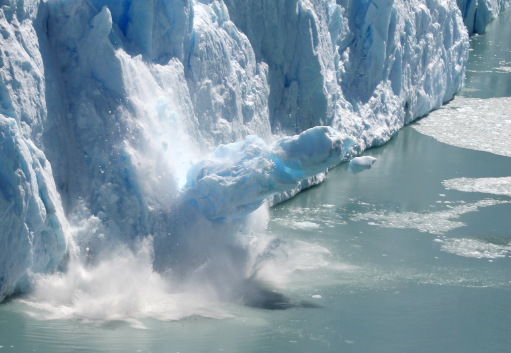
The rapid recession of polar glaciers is not merely a regional phenomenon; it is a fundamental shift in the earth’s hydrological cycle. As massive ice sheets in Greenland and Antarctica transition from solid state to liquid, they introduce vast quantities of freshwater into the saline ocean environment. This process, known as eustatic sea-level rise, represents a direct threat to coastal infrastructure and biodiversity worldwide.
The Albedo Effect and Feedback Loops
One of the most critical drivers of this acceleration is the albedo effect. Bright white snow and ice reflect a significant portion of solar radiation back into space. As this surface area diminishes, it reveals darker ocean water or land, which absorbs more heat. This creates a self-reinforcing feedback loop that accelerates warming at the poles at a rate significantly higher than the global average.

Ocean Circulation and The Disruption of Thermohaline Currents
The influx of freshwater from melting glaciers acts as a disruptor to the Atlantic Meridional Overturning Circulation (AMOC). This “conveyor belt” of global ocean currents relies on the density differences between cold, salty water and warmer, fresher water. When too much freshwater enters the North Atlantic, it lowers the salinity, potentially stalling the deep-water formation that drives this global climate regulator.
Consequences for Global Weather Patterns
A weakened AMOC has profound implications for global climate stability. It can lead to more extreme winter weather in Europe, altered monsoon cycles in Asia, and shifts in the Intertropical Convergence Zone, which dictates rainfall for millions of people in the tropics.
| Factor | Impact of Glacier Loss |
|---|---|
| Sea Level | Rapid, non-linear increase in coastal inundation |
| Ocean Salinity | Decreased density, weakening thermohaline circulation |
| Thermal Regulation | Loss of planetary cooling mechanism (Albedo) |
| Marine Ecosystems | Disrupted nutrient upwelling and habitat loss |

Mitigation Strategies and Future Projections
Addressing the crisis of polar glacier retreat requires a multi-faceted approach centered on decarbonization. While the momentum of current climate change ensures some level of continued melting, aggressive reduction in greenhouse gas emissions can prevent the most catastrophic “tipping points,” such as the total collapse of the West Antarctic Ice Sheet.
Expert Advice: What Policy Makers Must Prioritize
- Carbon Sequestration: Investing in large-scale carbon capture technology to lower atmospheric CO2 levels.
- Coastal Adaptation: Developing resilient infrastructure for coastal cities expected to face rising tides.
- Global Monitoring: Strengthening satellite-based ice-mass tracking to improve predictive climate modeling.
Frequently Asked Questions (FAQ)
- Why does melting ice on land raise sea levels more than melting sea ice?
- Sea ice is already floating in the ocean, so its displacement is already accounted for in current sea levels (Archimedes’ principle). Land-based glaciers represent “new” water added to the ocean basin, which directly increases the total volume of the sea.
- How fast are polar glaciers currently retreating?
- Current data indicates that the rate of ice loss has accelerated significantly over the last two decades, with the Greenland Ice Sheet losing hundreds of billions of tons of ice annually.
- Can we reverse the melting of polar glaciers?
- While we can slow down the process by stabilizing global temperatures, large-scale reversal is unlikely in the near term. The focus is currently on mitigation and adaptation to prevent further acceleration.
- What is the primary cause of the rapid polar warming?
- The primary cause is anthropogenic greenhouse gas emissions, compounded by polar amplification, where local feedback loops like the loss of reflective ice further increase regional temperatures.